[00:00:00] Speaker A: As Emiliano Zapata said, la tierrez de quin la travaja books belong to those who read them, not to those who write them.
So I think that there is a beautiful interpretation there.
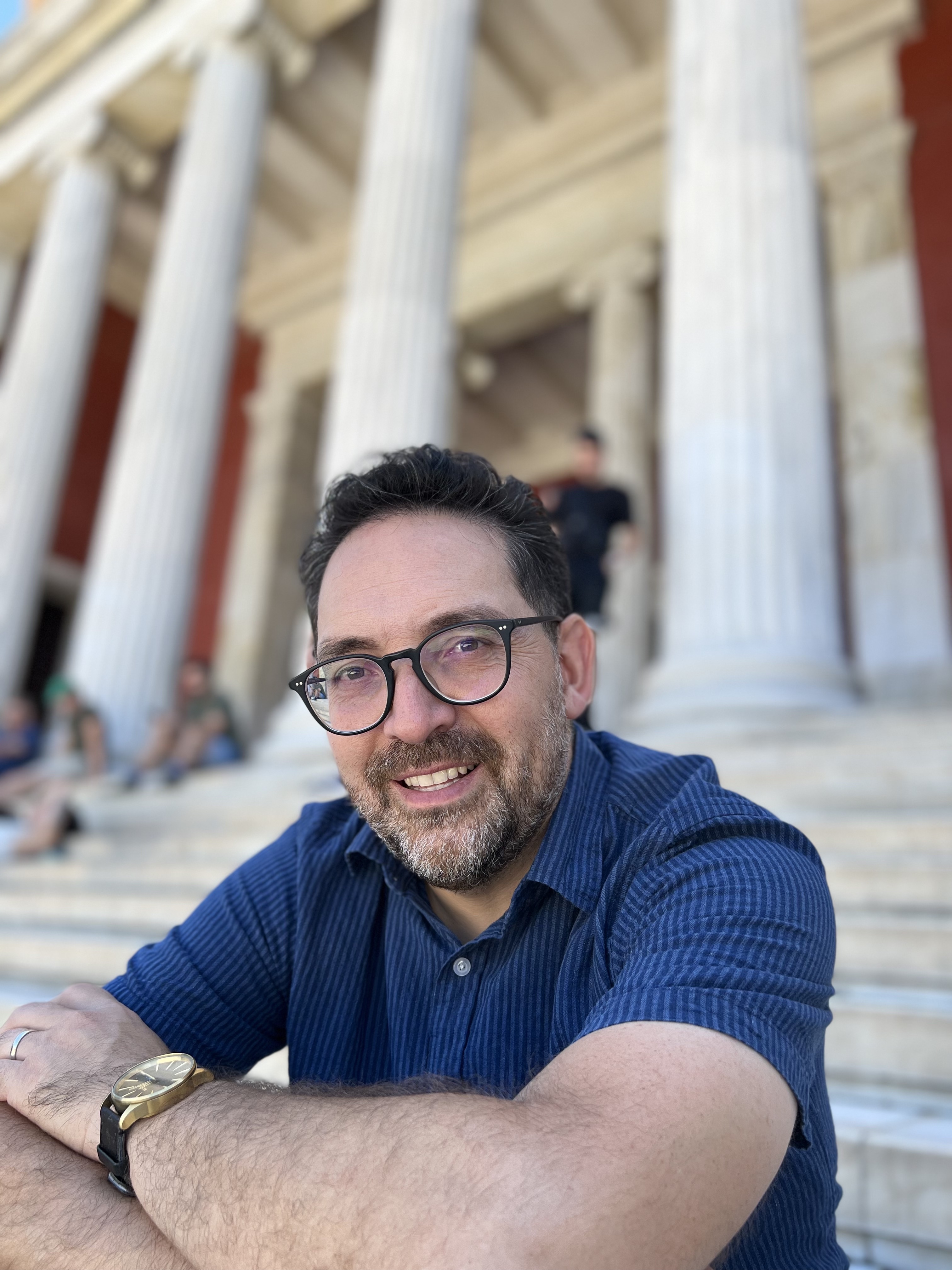
[00:00:25] Speaker B: Hi, my name is Geraldo Cadava and I want to thank you for tuning in to season four of Writing Latinos, a podcast from Public Books.
We're back for more terrific conversations with Latino authors writing about the wide world of Latinidad. As always, we aim to provide thoughtful reflections on Latino history, culture, politics, and identity and how writing conveys some of its meanings.
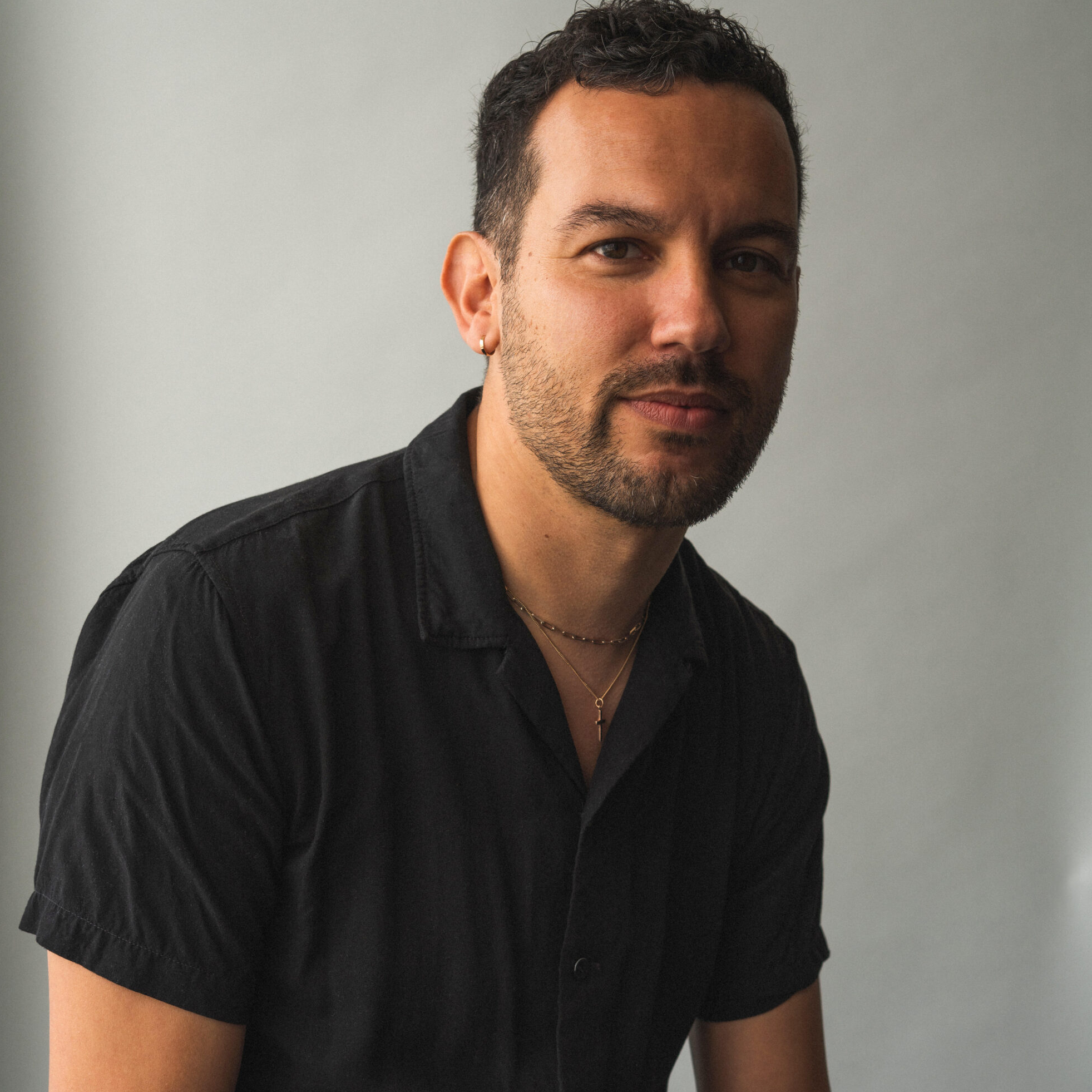
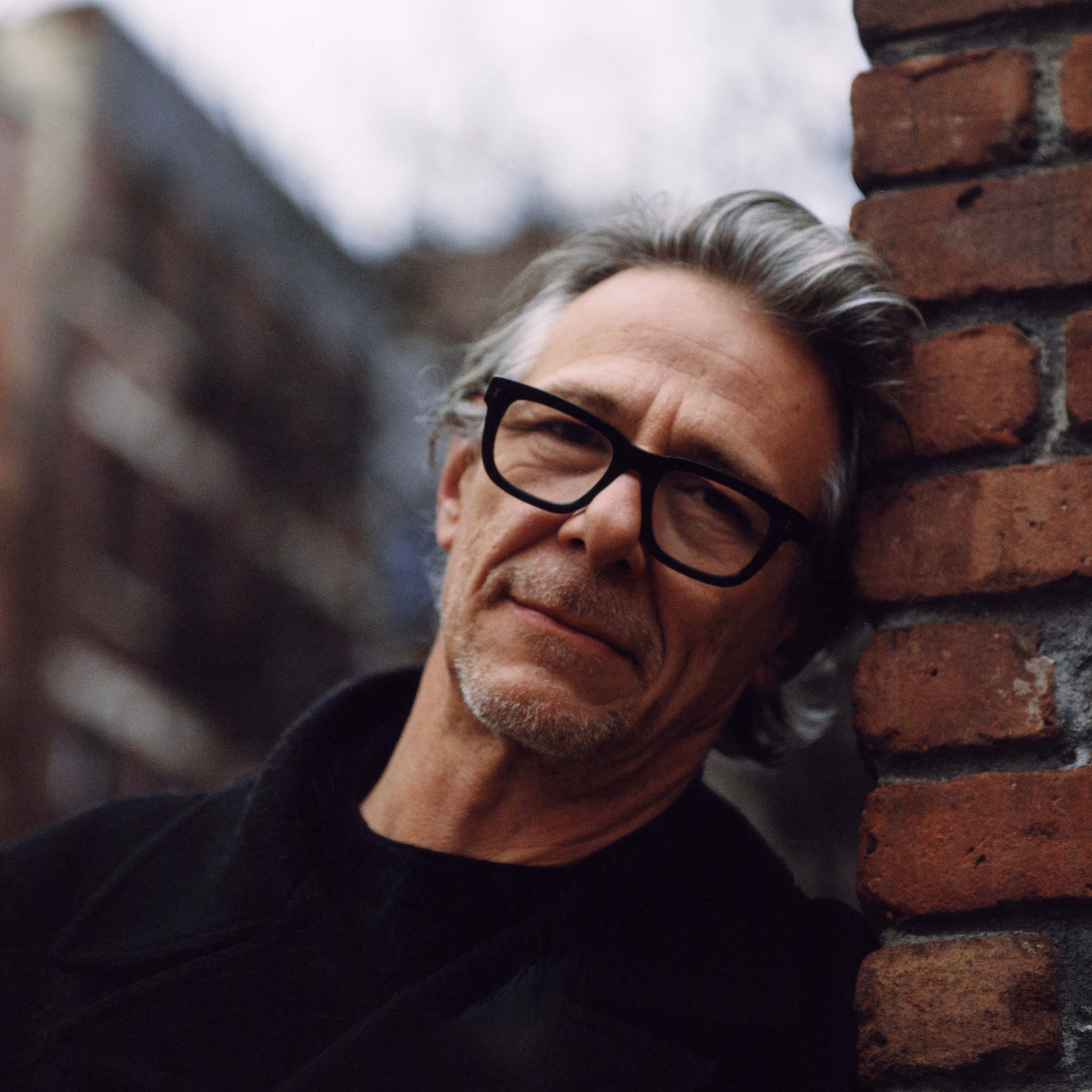
Don't forget to like and subscribe to Writing Latinos wherever you get your podcasts. And now for the show, we're lucky to have Alvaro Enrique with us today talking about a new English translation of his book about Geronimo, the Apache and the US Mexico borderlands, titled Now I Surrender, published by Riverhead Books and translated by Natasha Wimmer. Now I Surrender was Originally published in 2018 in Spanish. In Mexico. It's as relevant today as ever, given the daily catastrophes caused by our new age of imperial expansion and and delineations of racial difference.
Now I Surrender was named by the New York Times and the Washington Post as a most anticipated book of 2026. It's the follow up to his widely acclaimed book, you Dreamed of Empires.
Listen in as we talk about Geronimo's legacy of resistance, the meaning of his famous line from which the title is drawn, road trips and visits to historical monuments, and Enrique's thoughts about Latino literature and his own diasporic Latino identity.
Alvaro, it's so nice to meet you and talk to you. Thank you so much for taking the time to join us today.
[00:02:08] Speaker A: Thank you for inviting me, Geraldo, and
[00:02:10] Speaker B: thank you for writing this book, I guess almost a decade ago. I am from Tucson, Arizona. That's where I was born, and I've been to Teposlan several times. And you have this line in the book where you say that Tucson, or maybe you're talking about Southern Arizona generally, you say it's just like Teposlan, an abandoned Teposlan. And I would have never thought of that comparison between Tucson and Teposlan. But I'm intrigued, so I'd love to know what you mean.
[00:02:35] Speaker A: Well, I think that I don't know exactly what I meant, Geraldo.
At least I know that there are very rational writers. But I am a writer that just moves by impulse and with no process at all. This is the first time I write about the border territory and I don't Know, I'm not sure that I have the right to do it because I have always lived or in Mexico City or in New York and in the East Board.
Nevertheless, I live in this divided world between Mexican culture and American culture. And I'm a person with two passports, with two languages, with two everything.
So I think that it's a natural exercise on me to be seeing the world and comparing these two realities. I certainly, being a person that has spent most of his adult life in the east coast, there is no landscape here. It's just plain. So I think that is natural for me, that when I move to the West, I will feel home because the landscape becomes so eloquent and dramatic. And Mexico is defined by the very dramatic landscape.
[00:03:46] Speaker B: I think it's an interesting comparison because when I first went to Teposlan, I was struck by, you know, you could go have a foot bath and have your aura red. It's very spiritual. And to me, it reminded me more of, like, northern New Mexico and Santa Fe, like the land of enchantment and magic. Tucson has some of that, but I think of it more as, like, New Mexico. But I actually like the comparison because I love Tucson and I love Teposlan both. So I like thinking of them together. I just hadn't done that before.
[00:04:18] Speaker A: It's so beautiful.
[00:04:19] Speaker B: Well, you describe it beautifully in Now I Surrender Too, where you're talking about the Chiricahua Mountains and overlooking, you know, Douglas and Agua Prieta. I mean, these are all roads and areas that I've driven over many times. And it's just. It is magnificent. It did bring me back to it, which actually brings me back to something you said about whether you have the right to write about the border region. And I absolutely think you do. And you've done it really well.
[00:04:46] Speaker A: I think that the actual administration moved the border all the way to Minneapolis.
[00:04:51] Speaker B: You're right. We're all living in a borderland, so more than ever, we all have the authority. So I wanted to know the writer in your book. He calls the book that he's working on an Apache book. He's working on his Apache book. And Now I Surrender in a lot of ways is your Apache book. And so I wanted to know what drew you to the topic of the Apaches.
[00:05:16] Speaker A: It's always complicated to remember that moment because, as you may know by now, a book is cooked in your brain and then in the library for years and years before you actually dare to begin to tell a story.
And, of course, to produce a meditation on landscape, on history, etc. But I was drawn to the Mexican part of the Apache War.
When I was in college, sorry, in graduate school I had always an attraction to that mythology that as all children in the world, came to me through westerns.
I was always very attracted to that landscape. But it was during graduate school that one day, Jose Milio Pacheco, he knew about my interest. He knew I was reading the Autobiography of Geronimo in one of his on the classroom. And then Jose Emilio Pacheco, enormous poet who I had the privilege of being a student with.
One day he told me, you like Martin Luis Guzman. Martin Luis Guzman is this fantastic novelist from the first part of the 20th century Mexican literature, who was the secretary and the TA of Francisco Villa. He was like the intellect that did the work for Francisco Villa.
So he had an enormous, stupendous life and growth about it. And Jose Milo tells me the father of Martin Luis Guzman, who was a military man, was present in one of the surrenderings of Geronimo. Of course, I never found it because it's impossible to read everything that Jose Milio read. He was a reading machine. He was an unbelievable reader. Nevertheless, that pulled me to the history of the Mexican Apache War and then the intervention of the Americans, the expansion of the US to the Pacific coasts, all those stories that are told in the novel. I think that most of the time, from the point of view of a Mexican war that is well known in the US and it's ignoring Mexico for very dark political reasons.
[00:07:36] Speaker B: I was going to ask you that very question because you were born in Guadalajara and raised in Mexico City. So I was wondering, like, what is the consciousness of the Apache war in Mexico City?
[00:07:51] Speaker A: I have to discover, reading in American bookstores, that Geronimo and Mangas Coloradas Sanana and all those great captains of the Apache nation were, let's say, in juridical terms, Mexicans. Because Mexico conceived full rights of citizenship to anyone being born in the territory in 1821. And all of them were born after 1821.
So for me it was a revelation, an enormous discovery.
If Jerony Pumo had gone to Mexico City and asked for a passport, he would get it. That happened in the United States well into the 20th century. Wow. I'm proud of the writers of The Constitution of 1821 gave full citizenship to indigenous people so early in history. But that revealed a very obscure panorama that maybe discover that Mexico participated actively in the genocidal actions of the American and Mexican armies during the late 19th century and early 20th century. So I felt like the political origins to tell this story always from the point of view of Mexico that has simply ignored it. Because it's very comfortable for Mexico to say we are the brown people and it's the Americans who killed all the indigenous people. That, by the way, was not achieved. Indigenous nations are alive and kicking. They are just waiting.
[00:09:30] Speaker B: What are they waiting for?
[00:09:31] Speaker A: To have control of their land. I suppose I learned from my conversation with Apaches one very important thing, that the Mexican Apaches as much as the American Apaches, sooner or later, peace is sometimes a war strategy. We are fine now in peace. We finally find a way of negotiating with the central powers of both republics that have been so cruel with us.
And we are in that moment of cultural reconstruction. If I understand well that there is a different sense of history than the history that we are told in school in Mexico, in the United States, that move so fast and in which the republics are, let's say, eternal, they are not. My favorite metaphor is that after the Mexican American War, the border between Mexico and the US Was the Gila river, and they had to change it to the Grande River, Bravo river for us, because the Gila river moved kilometers in the summer. That is a beautiful metaphor of how the modern republics are fragile.
[00:10:41] Speaker B: I really loved the title of the book, Now I Surrender, which is part of a line that Geronimo uttered. And the full line is something like, now I surrender.
[00:10:53] Speaker A: That's all we used to move like the wind.
Now I surrender. And that's all.
This such a powerful, beautiful statement that relates precisely to this thing that we were speaking about. We are in this moment of negotiation with the Republic.
[00:11:09] Speaker B: Yes. And you have at several points in the book, different readings of those lines. And I'd love for you to talk just a little bit about especially the. And that's all part. I mean, what to me, when I read that, I was like, oh, I'm surrendering, but that's all I'm going to let you have. I'm not going to give you any more of myself than just the fact of surrender.
How do you read it?
[00:11:37] Speaker A: Well, this story is so moving.
The story of that generation of Chiricahua captains is so moving.
And the way of resisting the European invasion of the Americas that began in 1519 in the Continental Americas, the strength which they resisted is just so moving, so unbelievable, so powerful. And there are so many lessons, I think, to be learned about it. We are what we are, and we will stay being what we are, no matter what happens in the political context in which we are going through because we know that we have been here. I think that that's tremendously moving. In the novel, there is this meditation, if I remember well, in that chapter, about the fact that we don't even know the name of the land. America, not the family name of an Italian explorer that did a map that was wrong.
It's not even in Spanish or English. It's just America.
Geronimo was a very eloquent man. There is this feeling of, I will not use my eloquence to negotiate with you anymore.
Famously, in his surrenderings, as in his memoir, he would speak for hours, hours and hours. He really loved giving speeches.
He was a very eloquent and smart and brilliant politician.
In this moment, he's like, I have it.
And by the way, he didn't surrender at all in that surrendering. It was just one. After that, he went to the great rebellion that ended up taking him to a concentration camp in Oklahoma with all his generation of captains to have a very sad day.
Nevertheless, in that moment, he was like, I'm done. Even when he returned to the path of war just a few months after.
[00:13:39] Speaker B: The writer in your book is kind of toggling back and forth between his historical narrative of the Apache, but then also his adventure into Apacheria to kind of do the research and think about the landscape, things like that. So I think the fact that the book toggled back and forth between the historical narrative and the writer's experience is it led me to think about the ways in which Geronimo's life is also meaningful to the writer.
And I was thinking that the title Now I Surrender, also represents how the writer is also going through some process of his own surrender by migrating to the United States, giving up his Mexican nationality, not swearing loyalty to the Spanish crown. I don't know if I was reading too much into that, but is the writer in the United States also surrendering in some way?
[00:14:41] Speaker A: He never thought about it, but as Emiliano Zapata said, la tierrez de quin la trabaja books belong to those who read them, not to those who write them.
So I think that there is a beautiful interpretation there.
I perceive it in a completely different way, because interpretation is your job, not my job. My job is to tell a story, the story of the last of that group of warriors. It's so big, and in order to tell it in the most fair way you can tell it, you have to go so far away in the past and in the future that I needed a voice of someone telling the Stories that surround that story, that produce a context for the core story that is told during the novel. That is, I suppose, the life of Geronimo. I'm not completely sure anymore, because books just grow like trees. You cannot control them. They become something different than what you thought it was. The novel is composed by many shorter narrations. As you surely notice during the editing process in English, my editor was like, how many novels there are in this novel?
Every day I read 100 pages and a new novel begins. Can you just explain this to me? And what ties all that together is the voice of a contemporary narrator. I needed that voice to put together the different points of view that are introduced in the novel, that in most of the cases come from people that really lived and whose observations of the war with the Apache were notated in notebooks. But I needed some voice to tread all those stories in order to offer, I don't know, the operatic panorama of that war, because it is like an opera. It's very dramatic, it's enormous, it's beautiful. So it's eloquent.
[00:16:51] Speaker B: Writing Latinos is brought to you by Public Books, an online magazine of ideas, arts and scholarship. You can find
[email protected] that's P U B L I C B o o k s.org to donate to public books, visit publicbooks.org donate did the contemporary voice only come into the English translation or was it in the Spanish original as well?
[00:17:17] Speaker A: It is in the original. Well, I wrote it, I finished it in the previous decade, and it was published in Spanish in the previous decade. And I am a different person now. I think that we change. I believe in change. Nevertheless, we are always also the same person. But many circumstances, many things that I thought when I was younger, I don't think anymore.
So I saw the English translation just because I speak English, because I live a life in English as a second opportunity to type the book. So there are many changes, editorial changes, but the book is pretty much the same. The voice is more or less the same. And I have the absolute honor and privilege of working with Natasha Wimmer in the English translations.
Has this fantastic year to work with the different voices that are speaking through the book.
For example, there is a story that is told. One of the stories is told by the nun, by Elvis, the nun, that is. I will not spoil the novel, but that is in a complicated circumstance. And she begins to tell her story in that circumstance.
And I wanted that voice to be like a voice of one character, of Juan Rolfo. I wrote that story. I don't know, maybe 12 years ago, maybe 15 years ago, because I take years and years writing novels and I completely forgot about everything.
And when Natasha enters to that story that begins, I think in the second part of the book, Natasha tells me there's something ruffian about this voice. And I didn't even remember that when I began to work in that voice, I went to eat the voice to be the voice of one of the souls of Pedro Paramo.
[00:19:06] Speaker B: This is important stuff about translation, you know. And it relates to another question I had, which was, first of all, I just by reading your books and reading about you, I made all sorts of assumptions about your work and career that turn out to be wrong. Because I read in order I read. You dreamed of empires before I read Now I Surrender. But in fact, in Spanish you wrote Now I Surrender.
Before you wrote, you dreamed of empires, which I think is interesting because I had built up in my head this theory that you were kind of moving chronologically through the phases of conquest, from the Spanish conquest to the US Mexico borderlands.
[00:19:46] Speaker A: But we would need a book about the War of Independence in the middle context explains so many things about how we arrived to books and how books arrived to us.
[00:19:57] Speaker B: Well, I think that you should let me have my fantasy about how it's a very well plotted out chronological trilogy moving from the Conquest to Geronimo to who knows, maybe contemporary colonialism in Venezuela and Greenland and whatever.
[00:20:15] Speaker A: As I told you, my political hero is Emiliano Zapata. The land belongs, who goes to work it. And books also.
I think that when you are reading the novel, the artist is you. I just put words together. There are so many things that of course, a novel lets you do much more things than you can do in a film. You can have really like internal points of view. A person that is doing a film has makeup, art, music, dialogue. A novelist has just a bunch of words of words to put together.
So the one who generates the work, I strongly believe it is the reader, not me.
[00:20:57] Speaker B: Does that observation that the novel belongs to the reader, does that in any way shape how you think about the writing of the book, or No, I
[00:21:06] Speaker A: feel very free and very comfortable writing because I know that writing is literature, let's say fiction, a much more modest word. Fiction is a collaboration work.
So what I am doing when I'm writing a book is asking for your collaboration. And I think that produces the very comfortable relationship that I have with writing. I have this strange privilege of loving my work.
[00:21:36] Speaker B: I am a historian who thinks all the time about the relationship between the past and the present. And what kinds of stories about the past are necessary today to understand today? I think, again, like the fact that your book toggles back and forth between a past that's 150 years ago and a more contemporary voice led me to think about you as someone who also thinks about the relationship between the past and the present. And for you, I mean, it comes up in the book through road trips, right? I mean, you take a road trip into Apachea where you go to the Apache cemetery and see Geronimo's grave site. That's kind of a pyramid and different than all of the other Apache grave sites. And so I guess what I'm wondering is, what is it about going to these places and seeing these monuments that helps you kind of undertake the active imagination that you do when you write about the past?
[00:22:42] Speaker A: There is this line of Cormac McCarthy that is in the Order trilogy. I think it's the second book, the one of the kid that is chasing a wolf and crosses the border doing that. And he says, because the novel is the road for me, was like an enormous revelation when I read it in the first modern novel and maybe the best that has been ever written, Don Quixote, it's really a road novel. Moby Dick may be the best American novel. Moby Dick is a road novel. There is this beautiful, not so concrete observation of Stendhal that is, for me, a very major novelist and an essential figure in my formation. Stendahl says that a novel is a person walking in the road with a mirror, and what you see in the mirror is what the novel is. He's very early, speaking about the editing process and how we edit things in order.
Of course, he's perfiding. It's the 19th century. But how we organize narratives. I cannot avoid coming and going as you from the past to the present, because I think that the only way to live a full life is understanding, as much as we can, the reality in which we live. And I think that the microcosmos of the fall of Tenochtitlan, or the microcosmos of the Apache war, or the microcosmos of the painting studio of Caravaggio, tell loads about the way in which we understand the world, and more than anything, tell loads about how things that we consider that are given are not. They were invented in a moment. Our sensibility is artificial. History modifies everything we do. And of course, writing is always political.
There is no way to avoid politics. If you, Geraldo, give me your supermarket list, I can tell you for whom you vote. It's that simple. Everything we write is political.
I'm a 16th and 17th century literature professor. Imagine all we discuss is who has the right to tell the story, how literature changes the axis of how the enormous and the little event of history are told.
Those are questions that are in my brain all the time. And now in my brain there will be envy because you are a historian and I am not.
[00:25:15] Speaker B: Oh, I think you and I meet in the middle in a lot of places. I mean, yes, you've done a lot of historical work too.
[00:25:23] Speaker A: I just love working in libraries and I love archival. To ask for every very old books, just to see them. It's not that I really use them, it's just that I have a professor's card so I can ask for unbelievable documents in the American libraries. And I do it all the time just because I like it.
[00:25:43] Speaker B: But I was wondering if you think that Now I Surrender is part of the canon of what we might call Latino literature.
[00:25:53] Speaker A: My opinion is that I am Latino. Yeah, I'm Mexican American. Like juridically I'm Mexican American.
Culturally, I'm Mexican American. And I'm making an enormous effort to talk to you in English and not in Spanglish. That is the language that we speak in this house. No one thought that I would end up being a Latino writer in the us but from here to my then naturalization, I will be that. And if I return to Mexico to retire, as I dream to do one day, I will still be culturally American.
This is a very intimate story, but I think that it's a story that people of my generation will share.
After graduate school and working in American universities, I returned to Mexico because I wanted to return to Mexico.
I discovered there that. I don't know, I had become an adult in the United States. I didn't know how to do a check in Spanish. I remember that moment. I could be lost in the supermarket. Of course I returned to Mexico.
Minutos esta yolando como chilango. It's just a miraculous cultural change.
Nevertheless, I have lived for so long here, that would be silly to think that I'm not marked by this country. That, by the way, has been so hospitalarian to me and to my family. There are political discourses around. And being a Mexican, it's always difficult. Not only in the United States, it's just difficult to be Mexican. Nevertheless, I'm stamped by the culture of this country and I'm proud of it.
[00:27:28] Speaker B: I don't know if you remember this scene from the Narrative of The life of Cabeza de Vaca, where he begins his journey in 1527, and then he ends up in Mexico in 1535, and then first encounters other Spaniards who he had been separated from for eight years. He recognizes difference. He's no longer the person he was when he started the journey. He became someone else by the end of it.
[00:27:58] Speaker A: It's the best of the book of that generation. You have to remember that it's a deposition. He wrote it to defend himself of accusations of heresy. He had become a shaman and because he was culturally changed, the name of the book is just beautiful. Shipwrecker.
It's a defense. No. He's like, no, no, no. I'm Spaniard. Yeah, right. I'm a good Catholic. I just have to survive here and there.
So imagine the Copernican turn that his life gave when we read that deposition in which he's defending his belonging to Europe. You read it, and this man just changed forever.
He was touched by the Americas and became a different man.
[00:28:41] Speaker B: And that reminds me now of all of these Chicanos and Latinos kind of trying to apply for Spanish citizenship to go back and become Spanish all over again after, you know, being Chicano for all of their lives.
[00:28:56] Speaker A: My older son was telling me my Mexican passport has become so valuable.
Everybody wants to marry me because they can be Mexican.
[00:29:06] Speaker B: Thank you so much for your time.
[00:29:07] Speaker A: Thank you, Geraldo.
[00:29:21] Speaker B: Thank you for listening to season four of Writing Latinos.
We'd love to hear your suggestions for new books that we should be reading and talking about. Drop us a line at Geraldo.
Publicbooks.org that's G E R A L D O at publicbooks.org this episode is brought to you by Public Books. It was produced by Tasha Sandoval and our music is City of Mirrors by the Chicago based band Dos Santos.
You can follow us on Blue Sky, Instagram and X to receive updates about season four of Writing Latino House. I'm Geraldo Cadava. We'll see you again soon.