[00:00:00] Speaker A: But what is important for me always as a reporter was to humanize the human being that I had in front of me at that moment.
This person who is having an issue with his or her visa, who crossed the border, who is doing really well economically, who perhaps not who is in detention or not. Do you know, the human being is always to me the most important, a much more interesting story than the political backdrop.
[00:00:41] Speaker B: Hi, my name is Geraldo Cadava, and I want to thank you for tuning in to season four of Writing Latinos, a podcast from Public Books.
We're back for more terrific conversations with Latino authors writing about the wide world of Latinidad. As always, we aim to provide thoughtful reflections on Latino history, culture, politics, and identity and how writing conveys some of its meanings.
Don't forget to like and subscribe to Writing Latinos wherever you get your podcasts. And now for the show.
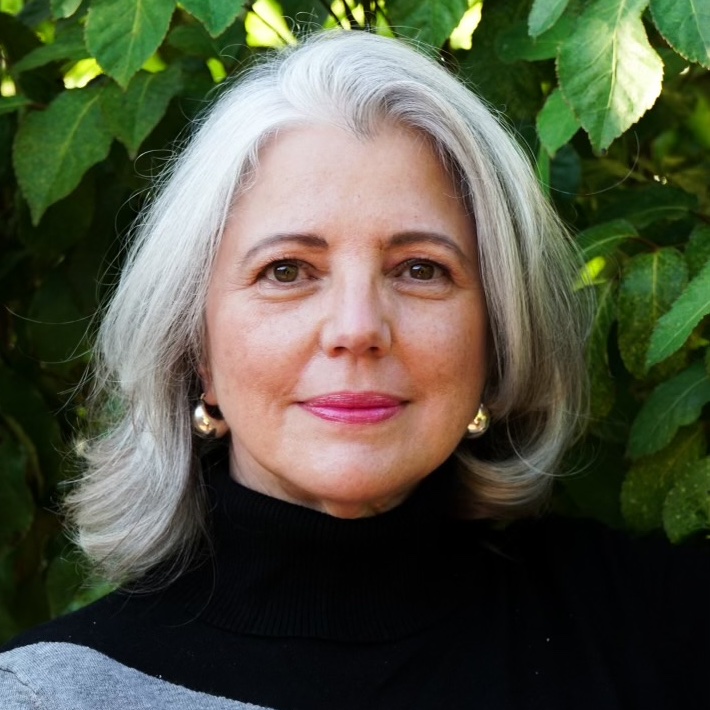
Mirta Ojito is our guest today.
I've been hearing about Ojito for a long time. My Latino journalist friends have all described her to me as a most generous mentor.
When I learned that she had written her first novel called Deeper Than the Ocean, recently out from Union Square and Co, I knew that I had to talk to her about it.
Ojito currently serves as a senior director for newsstandards at NBCUniversal.
Previously, she was a reporter for the New York Times, and before writing her novel, she was the author of two nonfiction books, Finding A Memoir of a Cuban Exodus and Hunting Season, Immigration and Murder in an All American Town.
Her novel, Deeper Than the Ocean, is a family drama that moves between the deep past and the present and between Spain, the Caribbean and the United States. We discussed the love between mothers and daughters, the return to Spain by many Latinos in recent years, Cuban history beyond the revolution, writing nonfiction and then trying your hand at fiction and our shared fear of open, deep, dark and mysterious bodies of water.
It was a real pleasure talking with her. Thank you for tuning in.
Mirta, thank you so much for joining us today on Writing Latinos to talk about your new novel, Deeper Than the Ocean.
[00:02:39] Speaker A: Thank you for having me, Geraldo.
[00:02:41] Speaker B: You've made a career as a reporter, and before Deeper Than the Ocean, you wrote two nonfiction books. This is your first novel. So I was wondering first if you could just talk to us a little bit about why you wanted to try your hand at this new genre. Well, I don't know if it's a new genre. You can tell us. Maybe you've been doing it all along on the side, but what kind of narrative possibilities did writing fiction allow that nonfiction writing wouldn't allow you to do?
[00:03:06] Speaker A: I'm a big fan of nonfiction writing and especially the kind of nonfiction that I like to read, which is narrative nonfiction and takes a lot of its elements from novels. Actually. It's kind of a writing like a novel writer would, except we're dealing with facts.
So that wasn't it. I think I could have done that with this book, absolutely.
But several things happened. The idea for the book, for this book, for this novel occurred to me almost 20 years ago when I found a book in Key west about the shipwreck of the Balvanera.
And that book, it's called El Mysterio del Valvanera or the Mystery of the Balvanera. And it's so well written that I couldn't imagine writing another book like it because it would be like translating the book rather than coming up with my own original reporting, which is what I like to do, what I like to investigate when I'm writing nonfiction. There seemed to me that there was nothing here to investigate.
Perhaps I was mistaken. Perhaps there's a lot more. But he's done such a good job. I also spoke to him, and I knew that he had other books. I wasn't the only one. For him, it's a bit of a mission and an obsession. He's been diving in the site of Key west, and he's an expert on the subject. I couldn't imagine doing anything better than that. And it's not like there are too many primary sources.
And that coincided with the fact that I had started a new job, the job that I now have, which is very full time, very busy as standards director, making sure that our product at Telemundo adheres to the highest standards of journalism.
So I couldn't really do what I had done before when I was teaching or when I took time off from the New York Times to work on my other books. I couldn't see myself doing that.
And the fact that I am a reader first and foremost, and I read a lot of nonfiction. I mostly read novels.
And I can't say that I always thought that I would write a novel because always is a long time, in my case.
But I've been toying with the idea. And then I thought, why not? I have a central event that's historical, that is true, that is fascinating, that no one I know has ever heard about.
And then I can turn it into a novel. I can think about the possibilities. And that seemed to me to be a richer experience at this point in My life and career, and I enjoyed it immensely.
[00:05:45] Speaker B: It's so interesting to hear you talk about how the shipwreck was the kind of genesis of the book and learning about it 20 years ago, just because some, many, most all of our listeners probably won't have heard of this shipwreck. Can you just tell us the very basics of it?
[00:06:02] Speaker A: Yes, of course. I love telling this story because if nothing else, these people deserve to be remembered. In 1919, it was a moment of great movement, great migration between Spain and the Americas. Not just the Caribbean, the Americas in general.
Between 1880 and 1930, about 4.5 million Spaniards left their country to move to the Americas for a better life. For the most part, this ship, the Balvanera, was part of that.
It left Spain in August of 1919, and it was scheduled to make several stops. The first one in San Juan de Puerto Rico, then Santiago de Cuba in Cuba, then Havana, and then Texas and New Orleans. Galveston in Texas and New Orleans in Louisiana.
The ship did do that. The first stop, Puerto Rico and Santiago de Cuba. But on its way to Havana, when it still had 400 passengers and of course, the crew, 88 crew members.
A hurricane developed. At that time, hurricanes were not named, so it's known as the hurricane of 1919.
It was so bad that the ship somehow lost its way and it disappeared. A few days later, it was found.
All kinds of people went looking for it, including, of course, the U.S. coast Guard, the U.S. navy. And they eventually found it off the coast of key west, about 43 miles.
It had sank in the bottom of the ocean, which is a very muddy part of the sea there near Key west.
And they couldn't find any bodies. The bodies had disappeared. Which is why the book that I read was titled El Mysterio de la Banera, because it became kind of a mystery. Where is everybody?
It was big news at that time. It was in all the papers. AP carried the story, the New York Times, the Miami Herald. It was front page. It was a big deal. And then it disappeared.
It didn't have the long legs or the romance of the Titanic, which I found interesting, because when I heard about it, I thought, how come I know about the Titanic? But I don't know about this story, which is much closer to me and to my history.
I don't know why, but one theory is that the people that were in the Balvanera were poor, unknown immigrants searching for a better life.
There wasn't the aura of wealth and romance and mystery that was created with the whole myth around the Titanic. It is known as the poor man's Titanic.
That, for a person who's covered immigration for most of her life as a journalist, was simply too good to pass on. I just needed to explore that story, and that's how I came to write. Deeper Than the Ocean.
[00:08:51] Speaker B: That's amazing. And just so readers don't think that they're going to open the book, and in the first page or two or three, you're diving right into the shipwreck. My memory of it is the shipwreck itself doesn't appear until much later in the novel. And so that means that you, even though that was the inspiration, you ended up building this whole world of characters that in the book precedes the shipwreck. So I want to get into the characters, but first I also want to talk about Spain, because you had mentioned this kind of big wave of migration from Spain to the Americas in the early 20th century. I think that in and of itself is interesting. I mean, me as sitting where I am sitting as a Latino historian. We think of Spain and the Conquest and so stuff like that. And then now, today, there are just debates about what role does Spain and Spaniards have in Latino history. And there was a lot of. I don't know, a lot, but. But a kind of undercurrent of your book because you are bouncing around in time from the early 20th century to the present. You have characters in the. The present or the recent past talking about applying for Spanish citizenship and the Spanish law of return, and so how people who had ancestors in Spain can kind of apply for Spanish citizenship. This is a subject. Maybe I'm just being selfish here. This is a subject that I've been really interested in over the past few years, in part because I have colleagues in Latino history who think of themselves as Chicanos. You know, they are people who are from the Southwest. They went to college in the 60s, 70s or 80s, and. And really thought of themselves as Chicanos. But now they are applying for Spanish citizenship.
[00:10:41] Speaker A: There was that other law that you were referring to, but that. That expired. And then they brought another one, and it ended October of last year, October 2025. And in the second one, I'm not sure with the first one, but with the second one, the last time I checked the numbers, in April of last year, 2025. And like I said, it ended in October.
About 680,000 people had applied. I cannot tell you the lines in Cuba to try to reclaim or claim Spanish citizenship. It's a very big deal. They've done it twice But I know people who are hoping they open it again. I was not one of them. I did not apply. I didn't do what my characters do in the novel for a lot of reasons that we can discuss, but I wasn't one of them. But the lines I could see at the consulate is very near my house here in Cora Gables. And it was unreal. I know people who pay lawyers $10,000 to research their family in Cuba, in the Canary Islands. And now I know a friend in Washington, D.C. she's been told she needs to wait eight years because the backlog is huge. Because even if you apply in the United States, it needs to be processed in the country in which you were born. So if you were born in Cuba, even if you came here when you were six months old, all of that documentation that they have in D.C. or in Cora Gable needs to go to Cuba.
So you can imagine the backlog of that. I think it's a very interesting phenomenon. I think the relationship of the Chicanos and many Mexicans with Spain is a little different from the relationship that Cubans have with Spain. I don't know exactly why, I'm not a historian, but several things come to mind. Independence took a lot longer in Cuba.
The independence in Mexico was in 1821, and in Cuba it was 1898. It's a long time, so that you had a Spanish identity. And institutions remain influential for a longer time in Cuba than in other places. Also, the Spanish were equally brutal wherever they went, frankly. But in Cuba, they decimated a very, very small indigenous community that certainly didn't have the influence or power of the Aztecas or the Mayas, so that the Cuban identity was forged more between Spain and Africa than with this indigenous community, because they disappeared for the most part. There are some people, descendants here and there, but for the most part, it's very much Spanish and African identity together for Cuba. So I think those elements make it a little bit different. But certainly Cuba, for the most part, again, it's very hard to generalize, but Cubans have very warm feelings towards Spain, the La Madre Patria, the mother country.
Our food, part of our music, our customs, even the way we speak, is very connected.
I remember in 2006, I went to a meeting of journalists in Madrid, and I met this great journalist who coincidentally, is named one of my main characters Juan Cruz. I didn't name Juan Cruz after that Juan Cruz, but I could have. It just happens to be a very popular name in the Canary Islands. And he's Canarian, so. So I'm talking to him, and when I heard him speak, I said, you speak like me.
And he said, no, no, no, you speak like me.
Of course, it's very funny, but it's sort of the same accent. And this time when I went, which was my first time last year, I heard also a very Venezuelan accent, which was very interesting to me, because though they're similar, the Venezuelan and Cuban accents are different. So for us, it's all very recent history and very connected to family in both places.
[00:14:19] Speaker B: Why was it important to you to have a main character who's kind of narrating the story have returned to Spain? Why did Mara need to be back in Spain?
[00:14:30] Speaker A: Why did she need to be back in Spain?
I'm not sure, but from the beginning, when I thought about it, she was always in Spain. I think it's because that's what I'd like to be, and because I have spent a lot of time like she did, or she lived in Santander. I have lived in Santander. I love it there. And like the character, I never wrote about it for the New York Times because I didn't want anybody to know about it.
It's a place that most people don't visit. Most people from outside the country. In the country, everybody knows it, but tourists tend to go to other places, which is fine by me. I want it all to myself, exactly like the character.
So I think the idea was always for her. I think it would have been difficult to justify now from a tour journalism point of view. It would have been difficult to justify having a reporter, say, based in Miami and sending her to cover a shipwreck, as she does in the Canary Islands. They would have sent someone who was already based in Spain, so she needed to be nearby so that she could do the assignment. She needed to cover the assignment because that's what allows her to then fulfill her mother's wishes, which is to find her grandmother's birth certificates so that she can apply for Spanish citizenship. This is what Mara's mother asks of her, and for that to happen, she needs to be going to the Canary Islands. So I guess one thing led to the other.
[00:15:59] Speaker B: And you talking about how a story would get assigned to someone who's already in Spain is interesting because I will just pause and tell all of the journalists who might be listening that this is also a novel for you, because I. One of the things I found most enjoyable is just all of the little insights into journalism and how relationships work with photographers and editors through the character of Mara, because.
Makes sense. You've been a journalist your whole life, so. So you offer a lot of insight through Mara, too, about just how journalism works.
[00:16:34] Speaker A: Mara is not me, but I gave her a lot of me. First of all, I made her a mother. And I am the mother of three now men, but three boys.
She's the mother of one, Dylan.
I gave her a nationality. She's Cuban, like me. A refugee status. She's an exile, like me. She left Cuba. I wanted to make it a little bit different. So she left Cuba in 1979. I left in 1980, but we both left in boats. So that was important to the narrative.
I gave her my love for Spain, and particularly the north of Spain, and particularly the city of Santander.
And I gave her my fears. I too, fear the ocean. And that's something that I gave Mara. I've always had very, very close relationships with photojournalists because they simply, they make your life easier. And it's so much better to work with a photographer. I'm sorry that some reporters now have to do everything themselves because the bonds you develop on a story with a photographer are forever. And also two people see more than one. I mean, I often, if I missed something, the photographer would go, did you see that? Did you see what she did? Because their eyes were trained in a different way. So I find that especially it's important for the work, but also as a person, it's just more enjoyable to go with somebody else on the trip. And then after you've done reporting, you can do what Mara does with a photographer. You go out, you have a drink, you talk about it. You're not alone with this huge thing that you just covered. And in the case of Mara, do you know the death of several people, including a little girl, that deeply, deeply impacts her writing?
[00:18:09] Speaker B: Latinos is brought to you by Public Books, an online magazine of ideas, arts and scholarship. You can find
[email protected] that's P U B L I C B O O K S To donate to public books, visit publicbooks.org donate I do want to ask you about the characters. You, you know, chose to narrate this story as a. As an intergenerational family drama, and especially one that focuses on relationships between mothers and daughters, relationships of love and obligation.
[00:18:47] Speaker A: And.
[00:18:47] Speaker B: And part of what I really appreciated about the book is how the focus was these intergenerational family dynamics rather than what I know to be these kind of big macro historical changes going on at the same time. World War I, the Spanish American War, the Platt Amendment, the Cuban Revolution, The Cuban Revolution gets in there, but again, later, later in the book. So could you just tell us a little bit about the characters, about Catalina in particular, and about Mara and Mara's mother? I guess those, to my mind, are the three women who kind of stood out the most to me as the women kind of carrying the book forward. So why did you choose to narrate this as an intergenerational family drama?
[00:19:33] Speaker A: The book is a historical novel written in two voices and two different times.
One of the voices is that of Catalina Quintana, who. Which, by the way, is my real grandmother's full name, my maternal grandmother.
And it was always going to be that name for reasons that we can explore. But Catalina is born in 1900, and she's the daughter of silkworm farmers in the Canary Islands, specifically on the island of La Palma.
And very young, she falls in love with a neighbor who, in her father's eyes, is the wrong boy, quote, unquote.
And then all kinds of things happen that her life changes and she needs to go to Cuba. And then, more than 100 years later, there's Mara Dennis, a freelance reporter, middle aged freelance reporter, a widow, and the mother of one child.
He's in college. And she always wanted to be a foreign correspondent. Nobody sent her anywhere. So she decides one day to pick up and go. And she goes to Spain. Spain, where she already had an apartment, because she has inherited this apartment from her husband, who passed away.
While she's there, she gets an assignment to go to the Canary Islands, because at the time there were. And often that continues to be the case. But it's just sometimes it's more than other times. Migrants going from Africa to the Canary Islands. For your listeners who don't know, the Canary Islands is an archipelago of about 14 islands, eight of which are inhabited.
It's closer to Africa, about 63 miles than to Spain.
It's very easy to go from Africa, from certain parts of Africa. Africa is a big continent, of course, but certain parts of Africa to the islands. And once you get there, if you make it, you are, for all intents and purposes, in. In Spain and therefore in the European Union.
So Mara is tapped to go on assignment to cover this sort of exodus that is coming from Africa to the Canary Islands. And while she's on her way there, her mother calls and says her mother is Lila and she lives in Miami.
Since you're going, can you please get my grandmother's birth certificate, because I want to become Spanish citizen. Mara thinks it is a little weird. Her mother is about to be 80. But the mother says, you know what? Two passports are better than one.
And I think history has proven me right. Because now people are trying to get two passports wherever they can get them. From Portugal, Spain, you name it. So anyway, when she goes in this dual assignment, she uncovers a secret, let's put it that way, that changes her life and her own idea of herself and of her family.
[00:22:30] Speaker B: You had asked me or invited me earlier to ask a follow up about why you haven't decided to try to go back to Spain. Why? Why not? Why don't you want to become one of the returnees?
[00:22:43] Speaker A: Because I didn't think I could. I. I have to. It's so strange. But we came from Cuba in 1980 and my parents were 40.
They were preoccupied with surviving in this country.
In my case, learning a new language. I didn't speak English, going to school, advancing in life, advancing in my career, reporting the stories of others.
And somehow in all that confusion, I didn't report my own story. I didn't have a sit down conversation with my parents in which I asked, do we have anybody in the family from Spain?
It just didn't occur to me when all of this happened. I could see that all my friends all of a sudden had grandparents from Spain and great grandparents. And I'm like, well, my character does, but I don't think I do.
And it turns out that I do on two sides. I have a great grandfather, my mother's grandfather, Antonio Quintana is from the Canary Islands, and also a great grandmother on my father's side, Clara Cruz.
And both last names are in the book. I should have. Honestly, Geraldo, I don't know.
Both last names are in my family, both last names are in the book.
And I didn't connect the dots. It's kind of silly, but I didn't.
I had done one of those DNA testings a while ago and it kept changing. It kept changing and finally settled into 51% from Spain, which. Okay, makes sense. 51 from Spain and then the rest, a whole bunch of things.
Northern Africa, a little bit of Jewish blood, all kinds of things, which again, makes sense.
But then it continued to rearrange itself and one day said that my entire 51% was from the Canary Islands.
By that time I'd already written the book. I didn't know that.
I suppose I had a little time between the time I found out and the October deadline, but I just didn't have enough information. All I had was names. I didn't know in which island they were born or when they were born. And it just seemed to be, like, a lot of work to do that. So I didn't do it. I didn't do it. Honestly, practically everybody I know has done it, which is wild.
[00:25:18] Speaker B: I wanted to ask you, I don't know if you are familiar with Ada Ferreira An American History, one of my favorite parts about it. She makes this explicit point in the beginning about one reason to tell this very long history of Cuba is that in the recent past, everything we think about Cuba has been so weighted down by the revolution. And so she wanted to write a long history that tells us a full. Gives us a fuller picture of Cuba than just the revolution. And there were ways. And I was thinking about that point she made when I was reading your book, because the revolution is in the book. It's there, but it's very much in the background kind of. I mean, the focus is the. You know, it's the.
[00:25:58] Speaker A: The.
[00:25:59] Speaker B: The family drama that we've been talking about. So what I want to know is, you know, I don't. I don't know if that was an explicit point for you to write a book about Cuba that wasn't weighted down by the revolution, but then also for people today or people, let's say, over the past 50 years, over which period, you know, so much of our thinking about Cuba has been weighted down by the revolution. When they pick up your book and read Deeper Than the Ocean, what. What do you want them to learn about Cuba besides the revolution?
[00:26:34] Speaker A: Well, I think Ada Ferrez made a very good point. We're not just a Cuban revolution. We're a lot more than that. And in my particular case, I did not want to turn it into a political book. I wanted to write a book about families and.
And the ties that bind us and that are deeper, that go deeper than the ocean, that are stronger than anything. I think the COVID of the book is genius because while it shows what could be waves, they could also be silk threads, and they could also be these connections between generations and people.
It encapsulates everything that I wanted to say about these families and how they represent what we truly are.
And so I don't. I also. The first 16 years of my life when I lived in Cuba, it was so political. Everything was so politicized.
They so wanted to sort of to test their ideals of the revolution and the new, quote, unquote, new man on us children, that when I finally left, I was exhausted. And I remember thinking, I'm done. I've already given them enough of My time and mental space.
So they do not get to live in my brain rent free, you know what I mean? I just don't think about them.
I'm not obsessed by them. And I have also found out that my experience in Cuba was mostly in Havana, which is where I lived.
But I also spent all the summers of my life in Sabanilla, which plays an important role in the book. That house that I described was real. Those people that I describe are real. The oxen that I name in the book, a Sabacha and Villanueva belonged to my grandfather. The mayor was Panchita. I mean, these are real things that I lived with every summer of my life.
And I realized that it was an experience in Havana. I was going to say Miami, but in Havana that was different from that of the very, very deeply rural areas.
Their problems there were so different to our issues in Havana. Not unlike rural and urban areas or the coastal areas of the United States. And the central.
In those places, people were more interested in the harvest, in the rain, in the things that truly impacted their lives on a day to day basis. That doesn't mean that the Cuban Revolution did not impact their lives as well. Of course it did, but it was. Other things were more prescient for them. And I wanted to get to that in the book, to separate a little bit between rural Cuba and experience in the urban experience of Havana. That's why you. You don't feel that presence as much as you do perhaps in other books. But even in my memoir, finding a memoir of a Cuban Exodus, which could be more political, it frankly isn't. It's a book about people, it's a book about relationships, it's a book about families.
Because that's what is really important.
When I covered immigration, which I did for a long time, yes, of course, the backdrop of everything is US policy or Mexican policy or whatever policy.
But what is important for me always as a reporter, was to humanize the human being that I had in front of me at that moment.
This person who is having an issue with his or her visa, who crossed the border, who is doing really well economically, who perhaps not who is in detention or not.
The human being is always to me the most important, a much more interesting story than the political backdrop.
[00:30:25] Speaker B: I have one more question. Very silly. I am terrified of the water, terrified of oceans. And I know and I come from a long line of people who are afraid of the ocean. My dad tells you who was born in the Canal Zone in Panama, tells me the story about how his father when he was teaching him how to swim, kind of like tapped the back of his calf on his leg and said, if you ever feel that, get the hell out of the water because it's a shark. So I have to ask you, now that you've written a book with ocean in the title and you know, your characters who are afraid of the water are in various stages of recovery from their fears.
Are you still afraid of the ocean?
[00:31:06] Speaker A: Yeah, that's one of my traumas. I think the book has a lot to do with inherited trauma. And I think many of us, not just me, have inherited that trauma. I know many people, particularly people in the countryside in Cuba, who never saw the ocean, who died without ever seeing the ocean. And those who did, like my mother, never really trusted it. But when I was doing the research for this book, I read about shipwrecks and oh my God, the Caribbean, it's like a graveyard, you know, it's like all these people coming from Haiti, from Cuba, from the Dominican Republic, going to Puerto Rico. Also the shipwrecks of the big Spanish ships coming to the Americas, Even Christopher Columbus, Santa Maria, it didn't sink, but it ran aground in Haiti.
So from the beginning, this has been an important and terrifying part of our history. And so many people, because that's the only way you could do it. How would you get to the Caribbean or to the Americas for that matter, coming from Europe, if not by ship?
So the traumas that most of us, many of us must have inherited from those stories, I think it's huge. And in my case, it's stuck and it's still there. And I don't think I'm going to change at this point. I do go in the water. And here's the funny part. Unlike my character, I like looking at it. I could sit there and look at it for hours and I'm fine. I just don't want to go in the water.
I do, but with a lot of precaution. And my feet have to touch the bottom all the time. But you look horrified. Do you not even go in the water?
[00:32:49] Speaker B: This is such a long standing conversation in my family. My, my wife's goal, I think, still. I'm 48 years old. She still really wants me to become a better swimmer. Like, my body just resists it, you know, she tries to teach me how to float on my back so that I at least won't drown. And my body just crumples up, you know, I can't do it. But what I. I loved your line in there about how you have these islanders who live with their backs to the sea, which is fascinating because you're literally surrounded by water. And I was trying to think about, when you were talking about the hurricane, are islanders afraid of water because of the destruction it can wreak? Or is it about the graveyards at the bottom of the sea? Those are like two different reasons to be afraid of the water.
[00:33:36] Speaker A: I think there are lots and lots of Cubans who are great swimmers and love it and love the beach and see that the seawall. Looking at the ocean, my experience is like, if I had a body of water, such a huge and beautiful Caribbean water in front of me, I would never look at the city. I would be looking at the water because I like looking at it. Yet when you look at pictures from Cuba, from Havana, many, not all, but many, are looking to the city, which is equally beautiful, if a little, you know, not so, not doing so well nowadays, but still beautiful. The moons are very beautiful. The structure of the city, it's very well laid out. It's a well thought out city. And so I can see the appeal of that too, to be looking at the city.
Do you know, I don't know why. All I know is my own case. And I. I cannot assume that everyone, everyone else has the same experience.
But when you live on an island, the sea is both what keeps you in and what lets you go out. It constrains you and it frees you.
So I think it depends on your possibilities. In my case, it led to freedom. I was able to live in a boat, of all things, not in a plane. I was able to do that.
But some of the people I imagine look at the sea longingly because they feel trapped by it. So it's a very complex relationship. For many reasons it is.
[00:34:59] Speaker B: And when you left on a boat, were you already afraid of the water then? Or did you only become afraid later?
[00:35:06] Speaker A: No, I've always been afraid. But when I left on the boat, I think I didn't have the chance to really be afraid because I got so sick the moment the boat started moving that I was practically unconscious for 16 hours. Just complete seasickness to the point that when I got here, they thought they needed to take me to the hospital.
But my mother was like, no, no, no, we cannot be separated. Just get it together.
But it went away the moment I touched land. It just disappeared. I've gone on cruises. It's not like I cannot take the water. I go on a cruise. I just don't want to swim where it's deep.
[00:35:44] Speaker B: And yet you've written a book about the ocean with the ocean in the title.
[00:35:48] Speaker A: Because, Geraldo, do you remember why Mara is called Mara? Because you have to name your fears. And of course, Mara is si or in Spanish, mar Na Mara mar.
The mother just added an A because her husband wanted to, and she said that she did it because she needed to name her fears.
So I think we write about what we know, but also what we're afraid of so that we can process it.
[00:36:16] Speaker B: Everyone should go read Deeper than the ocean to confront your own fears about the water and anything else. So thank you so much and congratulations. Congratulations.
[00:36:25] Speaker A: Thank you, Geraldo.
[00:36:38] Speaker B: Thank you for listening to season four of Writing Latinos.
We'd love to hear your suggestions for new books that we should be reading and talking about. Drop us a line at geraldobublicbooks.com that's G E R A L D oublicbooks.org this episode is brought to you by Public Books. It was produced by Tasha Sandoval and our music is City of Mirrors by the Chicago based band Dos Santos. You can follow us on Blue Sky, Instagram and X to receive updates about season four of Writing Latinos. I'm Geraldo Cadava. We'll see you again soon.