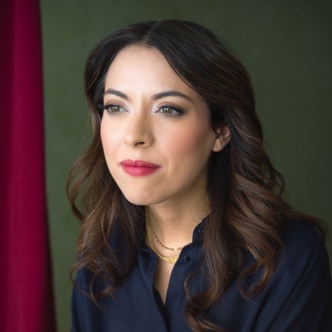
[00:00:00] Speaker A: El Paso always seemed to enter the national conversation through this lens of death and tragedy and national security and border walls and boots on the ground. And so I just wanted to tell a different story. I wanted to capture what makes El Paso El Paso, which is its people.
[00:00:28] Speaker B: Hi, my name is Geraldo Cadava, and I want you to pinch because I can't believe we're doing a fourth season of Writing Latinos, our podcast from Public Books.
What began for Tasha and I as a little pet project, an opportunity to talk with Latina, Latino, Latinx, Latinae writers about their writing, just because it was fun, has become a part of us and seems to have become part of the rhythm of your lives as well.
And writers keep writing such fun and interesting books. How could we not want to talk about them?
If you keep listening, we may just have to do a fifth anniversary season and then who knows what comes next?
We want to thank you so much for your interest and support.
In this new season, we talk with more authors writing about the wide world of Latinidad. As always, we aim to provide thoughtful reflections on Latino history, culture, politics, and identity and how writing conveys some of its meanings. Don't forget to like and subscribe to Writing Latinos wherever you get your podcasts. And now for the show.
Jasmine Ulloa is our guest today.
She's a national political reporter for the New York Times, and before the Times, she wrote for the Boston Globe, the Los Angeles Times, and several newspapers in Texas.
She's the author now of a new book out from Dutton. It's her first titled El Five Families and 100 Years of Blood, Migration, Race, and Memory.
The writer Hector Tobar has written about Uyoa's book. At Last, that Great Border City in the Desert has the book it deserves. I've known Ulloa for a few years now, and in this most recent conversation, we talk about the devastating El Paso shooting at a Walmart in 2019, her family's history in the border region, writing about your hometown and the relationship between history and journalism.
Thanks for listening to the episode and thanks for listening to Writing Latinos.
Jasmine, thank you so much for joining us on Writing Latinos to talk about your new book, El Paso.
[00:02:53] Speaker A: Thank you for having me.
[00:02:54] Speaker B: So the first thing I wanted to ask you, I wanted to take you back to a difficult moment in 2019 when you were not living in El Paso, I think, and so you were reading the news and watching the news as this kind of national tragedy befell the place that you had grown up. And so I'm wondering If you can kind of walk us through what you were thinking and feeling and how you wanted to be there in that moment and how that shaped your thinking about the book that you wanted to write.
[00:03:28] Speaker A: So, like you said, I was born and raised in El Paso, went away for college, but in the summer of 2019, I found myself on a plane back home after a self proclaimed white supremacist opened fire at this Walmart and he killed 23 people as he was decrying online what he called the Hispanic invasion of Texas. And this was a tragedy that happened three minutes from where I went to high school.
It affected people who I grew up with and loved dearly, including my best friend, whose father had been at the store that day. And so at the time, I was also a national political reporter for the Boston Globe. And I had already been watching El Paso become this backdrop to the nation's immigration battles. And some people were calling it the new Ellis Island. Right in this new Ellis island, we were seeing, you know, children getting separated at the border, migrants penned under the Santa Fe Bridge. So I had already been covering this violence at the border. And so all of this was very much on my mind as I'm going back home and I'm pulling on my experience as a. You know, I started out as a night crime reporter back in Texas. And so I thought I had thick skin. I'm trying to keep that thick skin, you know, trying to keep that shell as I'm reporting on this crime, running into people that I know at the scene. And it's just. It was just a very emotional time. And so I began thinking about how I wanted to return to this tragedy and really explore it. And that's when I started thinking about how I could tell this story and digging into the lives of five families who have crossed the city over a hundred years of battles over the southern border. And thinking about this argument that I wanted to make, which I firmly believe that is that there is no understanding the nation's immigration debate and where we are today. There's no understanding Latino identity without understanding this city first and making the argument that it is, you know, our new Alice.
But what does that say about us? And why don't we know that history as well as we know the history of Ellis Island? Why haven't we placed it at the center of our telling like we have Ellis Island?
[00:05:34] Speaker B: It sounds like I wasn't reading too much into what that experience of the shooting in El Paso meant to you and how it led you to kind of deeper thoughts about the city you came from and maybe even, you know, sparked your early thoughts about the book. But, you know, then you go back.
I would say that the shooting in El Paso is kind of like a recurring theme throughout the book. It's not like you address it at one moment and then kind of move on to other things. It keeps coming up. And so what I'm wondering is, how did you come to think of the shooting in El Paso as kind of representative of the city's history? You know, what's the relationship between what happened in el Paso in 2019 and the much longer history that you ended up telling in the book?
[00:06:28] Speaker A: I came to see El Paso as one of many cities in the United States that is in the middle of this perpetual battle about how we'll be defined as Americans and caught between this battle of visions of itself, one defined by division and another by connection. And I saw this tragedy, this shooting, as part of a much, much larger legacy, this sordid legacy of violence at the border, but also of the resistance to that, right. La conciencia colectiva, this work ethic of, you know, showing up for the collective good and pushing back against that nativism and that xenophobia. So I saw it at the center of these two tensions that have really made us as El Pasoans, as fronterizos, but also as Americans.
[00:07:13] Speaker B: You told this story through the histories of five different families, which is a really neat approach, I thought. And I'd like to hear you talk about how you chose these families to be, you know, the anchors of your story.
[00:07:31] Speaker A: So I'd been reporting on the border for more than 10 years. At that point, in some form or another, I had covered, you know, these battles over immigration from the border. I started out, still passes in the western tip of Texas, started out as a reporter on the southern tip of Texas at a tiny paper on the border. Covered it from the courts, covered it from the campaign trail. And so some of the families I had already met and covered their stories, and others sort of found me through the research. For example, the Chu family. The Chu's weren't part of the original five in the beginning, but I kept coming across the same image that I had seen before growing up, and it was of this woman with, you know, long, jet black hair. She's wearing a hat, kind of like a sombrero with a bandolier, you know, the straps of bullets around her chest. And when I had seen that photo, I had thought she was a Yaqui indigenous woman. And she's identified as such in some archives in some captions, in some photo captions. But as I started digging into that history, into her history and trying to figure out a little bit more about who she was, I found out she's actually a Chinese Mexican who was just posing because that's what a lot of Mexicans and Americans were doing in El Paso at the time during the Mexican Revolution, was posing as these soladeras or revolutionarios, female combatants, patents of the war. And trying to trace her history, I figured out that her ancestors were very much alive and they were now judges and prominent immigration lawyers and had been really molded by the story of their grandmother and great grandmother. And so I started reaching out to them and I just thought, like, this is incredible.
It's just so emblematic of the migration that has come through the city, of the city's rich multiracial, multiethnic history that I needed to capture.
[00:09:20] Speaker B: And what about the family of the indigenous migrants towards the end? How'd you come across that one?
[00:09:27] Speaker A: Kaj Mudal I met while covering immigration for the Boston Globe. I was doing a story out of El Paso about the people who were kind of caught in, who were stuck in Mexico waiting after the Trump administration implemented, you know, Remain in Mexico program, requiring most asylum seekers to wait in Mexico as they applied for asylum into the United States. And so he had been one of those people who had been stuck, who had made the journey and had been stuck in Juarez for a while.
[00:09:56] Speaker B: Part of what was interesting to me, at least, about the selection of these stories is that, you know, they're from different ethnic and national backgrounds, but all in this border city that's so often just associated with the US and Mexican connections. So it's a Mexican town. And this is familiar to me from Tucson, right where you expect Tucson and its people to be a story of the connections between the United States and Mexico and the non white population to be overwhelmingly Mexican American. But when I was writing about Tucson, it was also an important site of sanctuary from the Central American Civil War. So you had actually a much more diverse Latino community within Tucson than you would think. It wasn't just a Mexican American community. And I feel like in your book about El Paso, you know, where you have Chinese, Mexicans, indigenous Mexicans and yes, Mexican Americans too. You are also painting this kind of very multinational, multiracial, multiethnic picture of a border city that people often have a very different idea of. You could have told this story just about Mexican American families, but why did it feel important to you to choose families with a much kind of different background.
[00:11:12] Speaker A: I was trying to do two different things. I was trying to capture the fluid culture between Mexico and the United States, right. Like I said, I grew up there. You know, my family is deeply Mexican American, Proud Mexican American family, super complicated. We crossed over the border for doctor's appointments and birthday parties. And, you know, many of my friends crossed over every day to go to school with me in El Paso. And so I wanted to capture that, the vibrancy of that and the richness of that border culture, right, that's often called like, that third space that is still very much American.
And then at the same time, I wanted to capture that these transnational currents that have always been flowing through the city and that we don't usually tend to see, right, the migration of Chinese and Asian laborers through the city and then, like as you said, the Central American migrations, especially after these drug wars and Cold War interventions to destabilize Latin America. And so I was, I was trying to capture both of those, those themes and to show that it's always been a part of, of the border, even though we tend to see it as this just very narrow space, this just strip of land that, that just divides Mexico and the United States, that it's actually, it's just this much richer region that is where, where ideas and goods and people are just constantly flowing back and forth. And, and what is, what does that mean? What kind of lifeblood does that create?
And to show that it's actually not so scary as we've come to think of it, as many Americans have come to think about it.
[00:12:47] Speaker B: I'm so glad that you brought up your family because it reminds me that in all of the years that I've known you, I don't think I've ever asked you about your family and how your family ended up moving to El Paso.
[00:13:03] Speaker A: My mother was born in El Paso, but raised in Ciudad Juarez in a working class neighborhood and didn't have much growing up. My dad actually came from a wealthy family in Puerto Vallarta and never really wanted to cross into the United States. He actually went to Ciudad Juarez for high school and college because one of the premier institutions in agriculture was, was in Ciudad Juarez at the time.
His family was really a victim of this destabilization in Latin America that we're talking about, right? These, these Drug war and Cold War interventions that start to really destabilize the region. The economy falls, the peso drops in the, in the 1980s, his family loses pretty much everything in a matter of months. His economic fortunes are declining. My mom is crossing into the United States. My grandfather had been crossing for years, had managed to open up his own business, his own small auto and car mechanic shop in the United States. And they're crossing over and they're seeing their fortunes rise in this American economy. And so they happened to just meet at this dance in Ciudad Juarez where wealthy Mexicanas meet wealthy Mexicanos. My mother just happened to snag a ticket.
[00:14:24] Speaker B: And then how did they move to El Paso? Because you were born in El Paso, right? So.
[00:14:29] Speaker A: Yes.
[00:14:29] Speaker B: How did they get from there to Texas?
[00:14:32] Speaker A: Yeah, so by the time I was born, my dad was working as a car mechanic in El Paso and learning English and my mother was trying to go back to school. They met in Ciudad Juarez. They dated throughout, you know, as my mom is trying to go to college. But my dad finishes school and he wants to go back home to Puerto Vallarta and, you know, work in the fields. He still has this vision that he's just going to, you know, lift up the. The left. His family's fortunes, you know, that they're going to. They have just one plot of land left, and he wants to, you know, bring everything that he's learned to this plot of land and harvested and cultivated. And that doesn't work out. And so my mom drops out of college and. And joins him in that, in that venture.
It doesn't work out. And then they, they end up, you know, crossing back over the border and my dad goes back to school. That's. That's when he, she starts applying for, for. For schools. And it really ends up really falling for the version of the American dream. Not, not, not so much the materialistic part of, of the dream, but this idea that you could be anyone in the United States and remake yourself at any, any time and that, you know, this is a place that has the most revered institutions. And he's always been this man of science. He. He loves science. And so he, he goes on and, and gets multiple degrees.
[00:15:51] Speaker B: Writing Latinos is brought to you by Public Books, an online magazine of ideas, arts and scholarship. You can find
[email protected] that's P U B L I C B o o k s.org to donate to public books, visit publicbooks.org Donate for me and for us in this conversation, the important thing to note is that as a result of your family's history, this story that you've told is a deeply personal one. And not just because of, you know, the 2019 shooting and your relationship to that, but because of your family's much longer history, moving in and out of the border region and in the city. And so to me, you know, and now you're bringing this story to the, to a national audience with this book. And to me, that means you have at least two tasks in this book. One is writing for a national audience and explaining El Paso to readers across the country.
And it also has to be a book that I would assume you even want your family to see itself reflected in the story that you tell. So how did you think of reaching those different audiences? You know, what is it that you want a national audience to know about El Paso? And how do you want people in El Paso, like the people you knew growing up, to see themselves reflected in the story as well?
[00:17:21] Speaker A: So it goes back to those, those two objectives that I was talking about earlier, right, that I was trying to show that cross border culture between Mexico and the United States. And then also these broader forces at work, right, these broader transnational trends or flows at work as a fronterista, as an El Paso, and as someone who's very much of that place and considers it home still.
I was trying to tell a very different story about my hometown. Like I said, I had gone back in this middle of this horrific tragedy, and I was at the memorial site. This makeshift memorial site emerged on the side of the mountain. It was this overlook above the parking lot of the Walmart parking lot. And on this overlook, you have these sweeping views of the city. And you can see the highway. You know, you can see all the cars passing on the highway on the way to California. And you can see El Paso stretching far into Ciudad Juarez, right? Just this city of glimmering lights that just looks continuous. You can't even really see the border. And so I spent a lot of time out there kind of staring at that view. And it was just such a very familiar view because like I said, I went to high school three minutes from there, and this Walmart is right next to a mall and a movie theater. And so, like, this was the place where we went on dates, hung out with friends, you know, fooled around in the parking lot with the shopping carts when we were really bored, you know, so it was just bringing me, bringing me back to how I grew up and how frustrated I was that national reporters would parachute in and then parachute out.
And El Paso always seemed to enter the national conversation through this lens of death and tragedy and national security and border walls and boots on the ground. And so I just wanted to tell a different story. I wanted to capture the vibrancy of its people, this multiracial, multi ethnic mix of people, the diversity of Latinos within our community. So I wanted to capture what makes El Paso El Paso, which is its people, right? And that mix of workers who have. Of largely blue collar Mexican and Latino workers who have come and gone, you know, lured by the American dream and then cast out with the whims of every generation, you know, with these nativist periods.
And yet they have sacrificed and given their labor and help, you know, they worked in the mines and they worked in factories and laid tracks and helped build America, the United States as we know it today. And so that's.
That's what I was trying to capture. Not shy away from the violence, but also to show the fullness of the place.
And at the same time, I felt like in doing that, it also helped the national audience see the border and think about the border in that way. Not just how this immigration system has developed on the border and how this apparatus of detention and deportation has originated and in many ways operated unchecked along the southern border for many ways, and is now being released into the interior of the country, but the other side of that, like the. The. The richness of the culture and ideas and trade, that there's more to just the border than the enforcement side.
[00:20:40] Speaker B: I wanted to ask you too.
You know, I think writing about your hometown and the place you grew up is just an interesting thing. I mean, I remember when I was writing my first book about Tucson, it struck me that, you know, it took me all the way back to my childhood. And what I remembered is that my childhood, just even like my geographic footprint in Tucson when I was a kid was very narrow. I was at my grandma's house, I was at my mom's house on the southeast side of town. And we would go to, like, the mall in the center of town, and then we would go back to the east side. It was like a fairly small slice of Tucson that I was exploring. So then when I moved back to the city as an adult and wrote about it, I was just like, wow, this is such a bigger city than I knew about when I was a kid. And so not just that, not just the expanded geography, but just learning so many new things about the place that I had grown up and even visiting places where these histories had unfolded 100 years ago and knowing that I had been there and had no idea that these things happened in my city. And so, you know, you're writing in El Paso about Santa Teresa de Urrea, the soldaderas, the villas, Columbus raid in 1916 and the Magon brothers, things like that.
I have a lot of questions about this, but one is, what did you learn about your hometown as a result of writing this book? And when you were in elementary school, middle school, were some of the histories that you ended up writing about taught in elementary school and middle school, or were these, like, totally new episodes to you?
[00:22:27] Speaker A: So I. I had a little bit of a different upbringing, I think, from a lot of El Pasoans, because my. My mom and my grandmother were just so adamant about me learning Mexican history and learning Spanish. And, you know, Spanish was my first language that I felt as much from here as from there.
Like I say in the book, like, my. My mother and my grandmother would go cross over into Juarez and see whatever the kids in Juarez were learning, and they would bring those books over, and they would make me sit down and make me study, especially math. Like, they thought American students were just so behind in math.
But it wasn't just that. Like, my. My mom had gone to school in Juarez, and she had grown up learning about the Magonistas and the.
The Ninos. Edwards. Which. I opened the book with this legend of these six cadets who gave their life for Mexico in the U.S. mexico War. And that was just such an important story for her. And it was an important story that I knew and that I learned and that she would actually make me. If there was a school project, she'd be like, okay, well, what Mexican figure could we do? Or what Spanish figure could we do? It could be interesting. She was always kind of trying to instill that curiosity in me. But even with all of that, right. Even having those experiences, as I started digging into the history of this book, I was stunned. I was so surprised by how little I knew about El Paso itself, El Paso and Ciudad Juarez, and how much I just did not learn in school. And these were things that my mom and my grandma were teaching me on their own time. You know, like stories they were telling at night, bedtime stories, or like, things that they were making me study in the summer, but it was not taught in the actual curriculum at my public school. And still, with having some of that experience, there was just so much about El Paso I did not know. And I was just getting chills when you were talking, because Teresa Urrea, I found out, actually lived in a house right next to me when I was. I lived in this apartment complex in downtown El Paso as a child, and one of her homes was right next to that apartment complex. And I remember I had seen the plaque and had never even. It didn't connect until I was doing the research. And I ended up going to that house to do some research. Research. And I was like, wait a minute, this is right next to where I lived.
So there were many, many moments like that. I think one thing that I learned that I just was fascinated by was, you know, I went to UT Austin, but I didn't, I didn't work at the Daily Texan, which was like the big flagship newspaper, you know, at the big flagship school, like. And all my friends worked at the Daily Texan. And instead I was operating. Instead, I founded my own magazine on study abroad, my own study abroad magazine with a couple friends. And then we took over a Latino student newspaper. It had been founded by friends of ours, Latinos for Latino students, but they had graduated. And so we took it over as editors. And these were like publications. I was just running out of my laptop with volunteers. It was like very guerrilla. And we would print it out and we would walk around the whole school and deliver the newspapers. So then as I was doing the research, I come to find that there's actually this whole, this long tradition of independent journalism in El Paso and in downtown that a lot of these intellectuals and activists were coming into the city. You know, they were fleeing the authoritarian regime under Porfirio Diaz during the Mexican Revolution, and they were opening up their own printing shops in El Paso to deliver news to not only Mexicanos on the American side, but Mexicanos all the way down, you know, to where Emiliano Zapata was waging battle. Right. And it was just fascinating that that spirit was kind of, it was ingrained in me already part of that, studying that history too. The other thing that I learned from that was that I was just surprised by is, you know, as political reporters, we've been writing so much about how trust has declined, right, among Americans, not just Latinos, but all kinds of Americans and institutions and scholars and expertise and education.
How, you know, there's this anti intellectual movement in the United States because all these places are just these elite institutions.
The quest for equality, the quest for workers, right? It's just an elite pursuit that comes out of some ivory tower. And yet as I'm reading this history, I'm looking at figures like Ricardo Magon, who's actually like this law school dropout. He was a self made intellectual. He's just an avid reader and hangs out with intellectuals. And he's writing very much for the working classes. And he's on the lam fleeing Mexican and American authorities.
He's living in Canada. And yet he's delivering his missives and his stories to a guy in El Paso, an editor in El Paso, who's printing this out. And it's being delivered not by elites, but by working class, you know, minors and construction workers. Some of them don't, can't even read it themselves, you know, and they're just getting other people, those who can't, to read what's in those stories. And what's in those stories is what's still being talked about today, you know, this push for workers rights and unions and fair wages.
So I just thought it was really fascinating to discover a lot of that forgotten history or to resurface it and to resurface it for people that grew up along the border.
[00:27:43] Speaker B: I wanted to just ask you maybe by way of ending, what kind of broader thoughts you've developed about the relationship between history and journalism. You know, I think one of the reasons that I enjoy talking to you so much is that you're a journalist and that's your job. And yet you have a kind of interest in all of your stories, all of the reporting you do, in understanding what the deeper past of that issue is. And, you know, I'm kind of have done that in reverse, where I've kind of started as a, most of my career as an academic historian and have been doing more and more journalism lately. So this question could go in a lot of directions. But now that you've written a book, you're still, you know, a full time reporter. What have some of your observations been about? Is there a different temperament between historians and journalists? Do we work at a different cadence?
Do you find yourself able to get across more in a book than you can in a short story for the New York Times? Do you even want to keep writing books or do you want to, you know, has writing this book taught you that you really want to stick to just writing short stories for newspapers, or do you want to write another book?
[00:29:00] Speaker A: I've always loved history, like I said, because of how I grew up and how the women that raised me, not only my mom and my grandmother, but my mom's sisters, to be really proud and curious.
Education was just always top of mind. I think those experiences early on with learning that Mexican history consciously or subconsciously planted that question in me, that there's different ways to tell a story.
How history gets told really depends on who's telling it. I've always been curious by that. I've always been interested in that, even as I'm doing my own reporting. Whose perspective Am I missing in this? And I think that that's something very similar that, you know, journalists and historians do. And so I really took that approach in, in writing this book. So when I started it, I was, I was looking, I was doing the research. I was looking not only for the most eminent scholars on the border, but in. On the United States. But I was talking to historians in Ciudad Juarez. You know, I had one historian walk me all through the cathedral, all through the streets of some of the most important Mexican revolutionary sites. I went so far back as like, right, like this, the earliest indigenous trade center that was near Chihuahua, right, One of the earliest and most important indigenous trade centers in that border region. And they have, they actually have a life size replica of what some of the homes look like, you know, made out of adobe. And I didn't even know that that existed. And a lot of that history has been surfaced just in recent years by historians on both sides of the border working together and trying to preserve and to show El Paso and San Juarensis how important both cities have been not just to the United States, but to Mexico. And that's actually like another thing that I was fascinated by is, you know, I went in wanting to tell the story about El Paso. And you know, El Paso sits so far west, it's closer to Phoenix than it is to Austin, the state's capital. And so growing up, a lot of El Pasoans feel like we're forgotten by the rest of the state. Right. And so I wanted to, you know, place this city that had been at the margins of the United States at the center. And as I'm doing this research, I'm discovering, well, actually, Juarez has that same. That same struggle within Mexico itself. Like both these cities and how they're related and how important they've been to both countries has just been severely undermined. And so I leaned a lot on historians to kind of help me to surface that. I leaned a lot on my journalism skills to really tell it more like a story and to find that voice. And I wanted it to feel like my grandmother and my mother telling me these stories growing up. I wanted it to feel like corridos of Pancho Villa. Like, I wanted it to feel more. More like in that oral tradition that a lot of Mexicans and Latinos have, right, that we pass down stories by, by word of mouth rather than by reading or writing traditionally. And so, so that's. Those, those were kind of the elements I was playing with and thinking about as I was navigating that space between history and journalism.
[00:32:03] Speaker B: And I think that really came through in the book. I mean, you can tell from reading it that you are relying on a lot of your skills as a reporter and a lot of your skills as a historian, too, frankly, and just understanding the relationship between the past and the present and how we got from there to here. So thank you so much for talking to us. I just want to say, everyone, you should go pick up El Paso and read it. There's so much in there that'll lead you to your own thoughts about history and journalism, but also learning about storytelling and the fascinating history of this place as told by a kind of expert storyteller herself. So thank you so much, Jasmine, for joining us and good luck with everything.
[00:32:42] Speaker A: Thank you.
[00:32:56] Speaker B: Thank you for listening to season four of Writing Latinos.
We'd love to hear your suggestions for new books that we should be reading and talking about. Drop us a line at geraldoupublicbooks.org that's G E R A L D
[email protected] this episode is brought to you by Public Books. It was produced by Tasha Sandoval and our music is City of Mirrors by the Chicago based band Dos Sandals.
You can follow us on Blue Sky, Instagram and X to receive updates about season four of Writing Latinos. I'm Geraldo Cadava. We'll see you again soon.