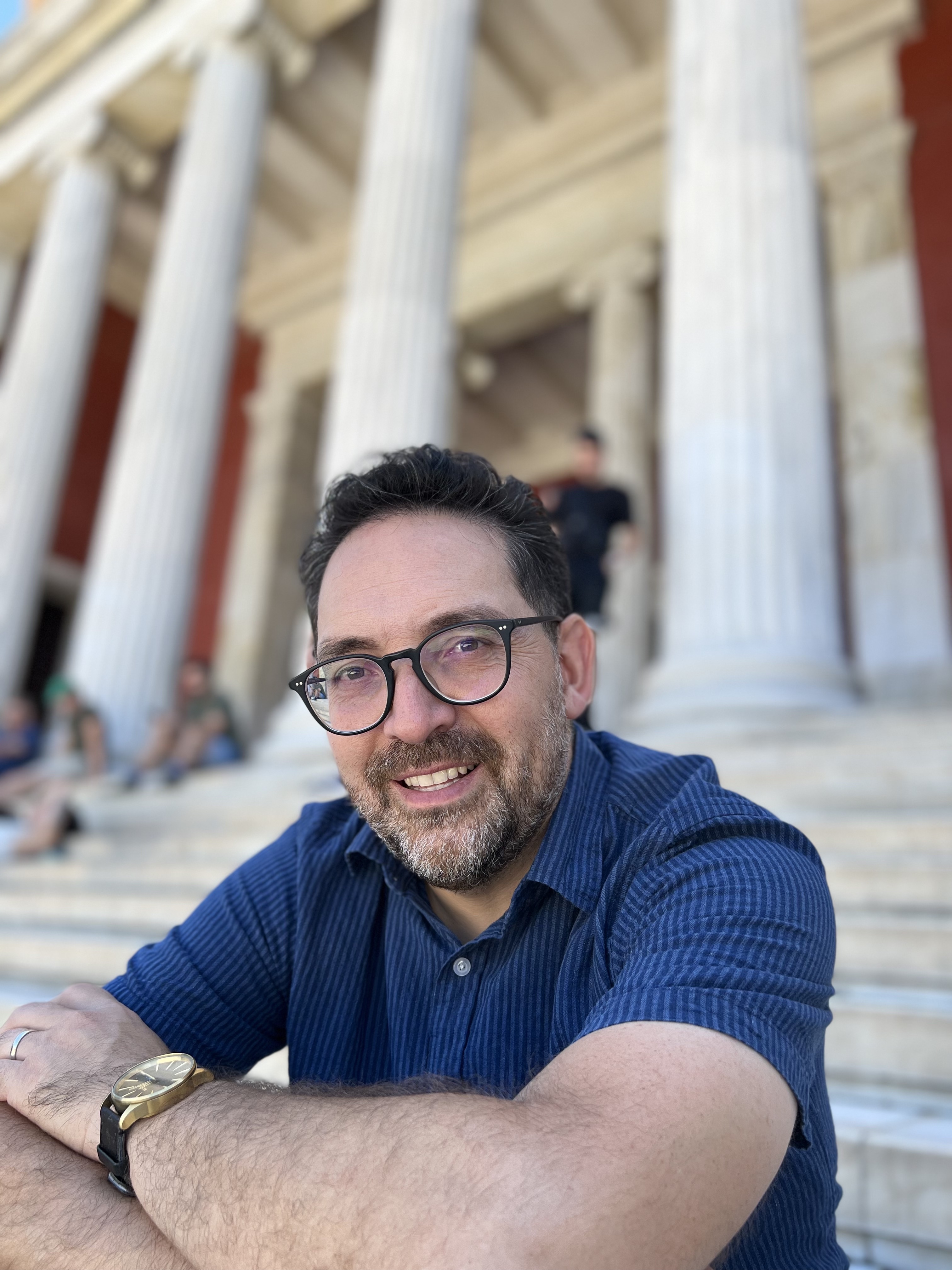
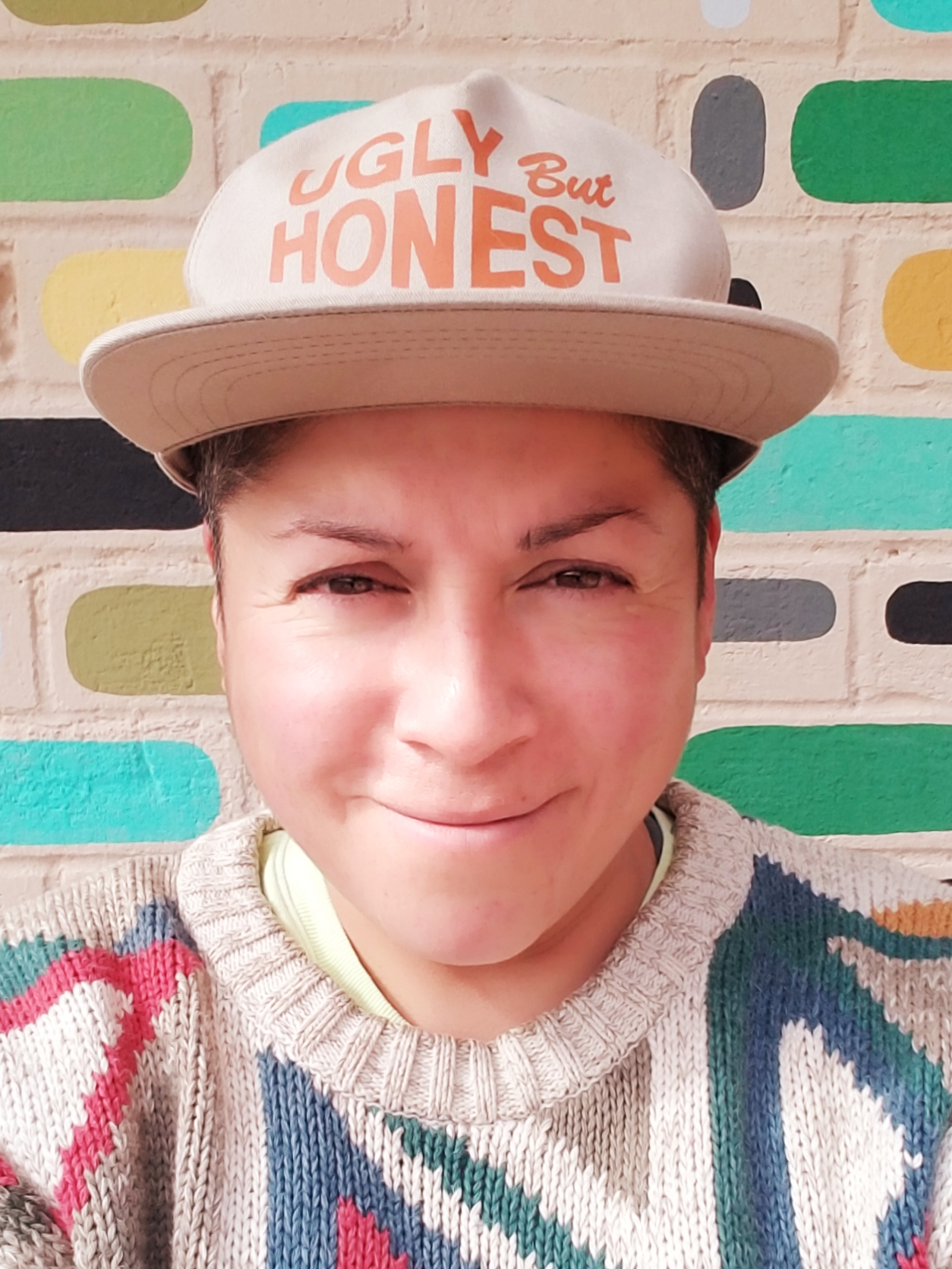
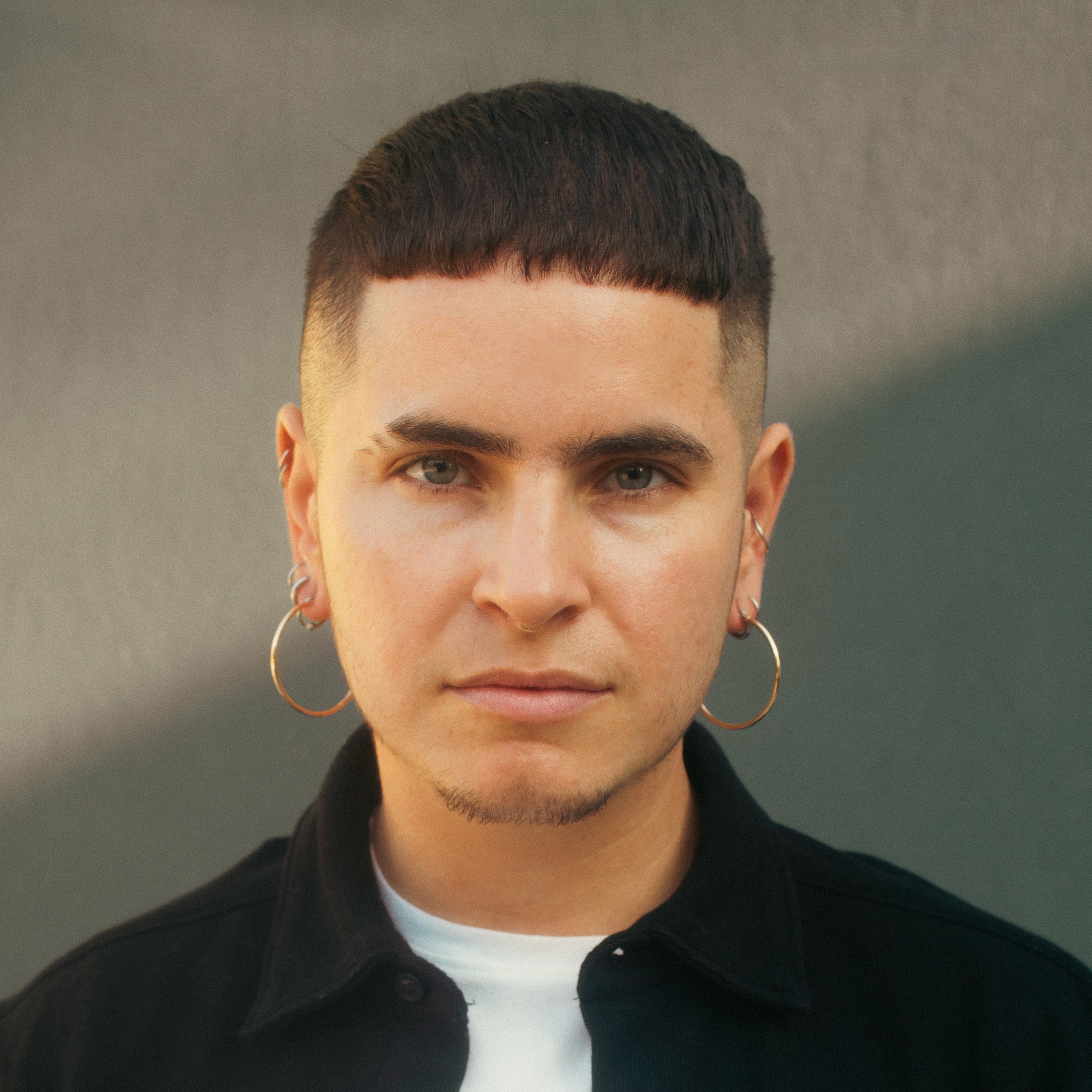
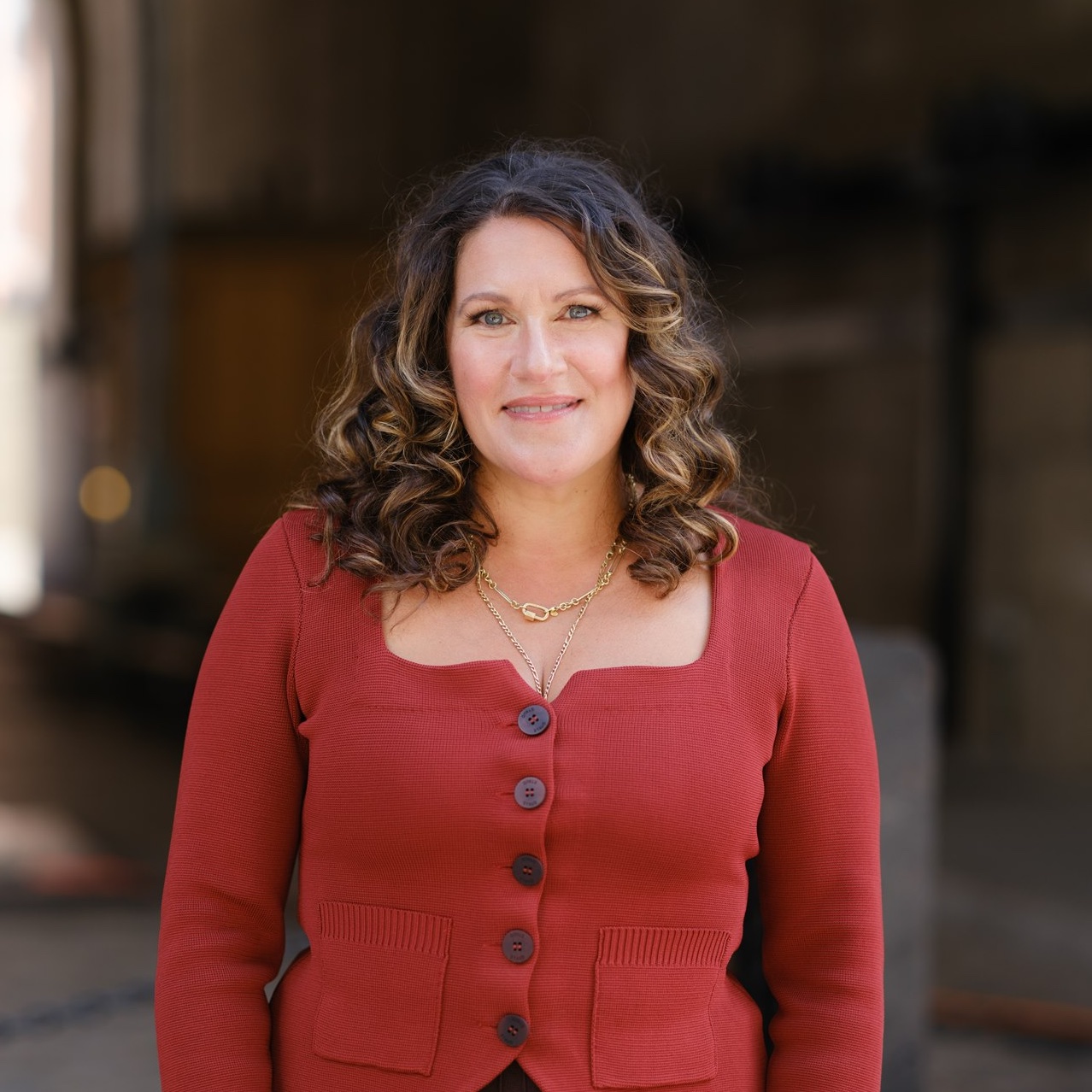
[00:00:12] Speaker A: Hi, my name is Geraldo Cadava and I want to thank you for tuning in to season four of Writing Latinos, a podcast from Public Books.
We're back for more terrific conversations with Latino authors writing about the wide world of Latinidad. As always, we aim to provide thoughtful reflections on Latino history, culture, politics and identity and how writing conveys some of its meanings.
Don't forget to like and subscribe to Writing Latinos wherever you get your podcasts. And now for the show.
We are so lucky to have Xochil Gonzalez as a guest on Writing Latinos.
What hasn't she done and what isn't she doing now? She used to be a wedding planner and today is a screenwriter, producer, novelist and essayist at the Atlantic.
We spoke with her about her newest novel Last Night in Brooklyn and boy is she prolific. Her novel, Anita de Monte Laughs last appeared in 2024 and her novel Olga Dies Dreaming in 2022. All were published by Flatiron Books. Last Night in Brooklyn is about gentrification, when the Brooklyn Nets came to town, multiracial and middle class politics in the age of Obama, what she describes as the insuperiority complex felt by many non white Americans and the state of Latino writing and reading practices.
And we talk with Gonzalez about all of it. Thank you so much for listening to this episode of Writing Latinos. You won't want to miss it.
Xochil, I really enjoyed reading your new novel. Thank you for joining us on Writing Latinos to talk about it.
[00:02:01] Speaker B: Thanks so much for having me. Yeah, it's always kind of fun when you get to start talking about a new book.
[00:02:06] Speaker A: Yes. So Last Night in Brooklyn is about a very specific time and place, Brooklyn in 2007, 2008. And you explore themes like gentrification, class, stratification within non white communities, and the promise and perils of politics in the United States. And I'm wondering if you can say a little bit about why that place and time was so important for understanding these themes that you explore.
[00:02:35] Speaker B: Yeah, I mean, first, locally, very locally, kind of two things happened around like three things. Like, you know, they just sort of had made headway on that stadium, which led to a lot of rezoning, which meant that they were then able to put up these luxury condos. And the luxury condos just completely changed the dynamics of Brooklyn because it essentially brought Manhattan style living to a place that was like row houses and brownstones and, you know, where you felt pretty good about having a fifth floor walk up and then suddenly now you've got like Amenities in a Pilates studio and a 24 hour door and the kinds of people that want those things. And so it really profoundly shifted the culture more than it was even about like the stadium. It was really the rezoning of those buildings. And it really changed Fort Greene because that was where the biggest kind of window of opportunity was in terms of, you know, space and ability to build. And then that happened on top of this kind of election and recession double header, which meant that a lot of, as usually happens with any kind of, you know, economic crisis, artists are the first people to get priced out of places.
And then it was also this kind of really interesting thing, which was what I saw happen because I lived there through all that time was like there was kind of a fascinating, like invisible fence around, like, know, historically black and Latino neighborhoods and especially like black neighborhoods, like where, you know, white yuppies were kind of like, well, I mean, I wouldn't get a cheap apartment there because it is a black neighborhood. And then Obama was elected and everybody felt like they could do anything because they voted for Obama.
Well, I mean, I did vote for Obama. So it became like a liberal free pass to kind of go and move and take over everything. And it really just shifted the whole neighborhood, like, honestly. And so a lot of people were forced out or forced further out or forced out of the city altogether. And then you had sort of just kind of a media class that kind of took over like that neighborhood. And then you sort of had it get really pumped up by these high rises. And so it was a real just change in Brooklyn completely. And, you know, at the time I was running the luxury wedding planning business. And the way that I always tell people I marked it was that prior to the recession, all my clients lived in Manhattan and they stayed on their side of the fence. And after the recession, everybody was my neighbors.
[00:05:18] Speaker A: Zochil, I'm glad that you mentioned that you were living there at the time. I was going to ask you about that, but I was curious then, knowing that you were living there. At what point did your observations of what was going on lead you to think that you wanted to write a book about it?
[00:05:35] Speaker B: Well, this is my third novel. My first novel took place. She also lived in that neighborhood, the protagonist. And my second novel, she wasn't from that neighborhood. But this protagonist of my second novel is a character in this novel.
And mainly it's because when I moved back to New York after college, everybody was living in Fort Greene. So there was like two degrees of separation from most people of color. I knew that had gone to an Ivy League school or an HBCU that everybody knew, kind of everybody. And so it made sense to set this book in that particular neighborhood. And I had known I was kind of. It was the third book and somebody told me it's not a trilogy, it's a triad. But like they were sort of meant to be protagonists with essentially a similar root place. And then you kind of catch them at different moments of their life. So Olga, you meet her and she's at 40.
Raquel, you meet her and she's about 20. And now you sort of get Alicia and she's, you know, like almost 30. So you're just kind of getting her in the middle. And I doled it out in the end. But I actually started writing this book because I kind of was like, maybe I am kind of done with this place. Like when I post Covid, I had to leave to go to get my mfa. I had to move to Iowa, you know, Cause that's the only way they let you go to Iowa.
And I was like, oh, maybe I'm not going to be able to afford to move back to Brooklyn. Like, you know, which is really kind of traumatizing, to be honest. But I was like, you know, what are we gonna do? And then I got an amazing few deals about and I was able to buy a better place than I'd ever lived in in my entire life. So I, you know, I moved back and I think the distance of just having left and the COVID and everything that kind of happened, it was like just so unrecognizable to me that it was making me grumpy. And I had this idea probably in the summer of 22 maybe, like, yeah, like for this particular book. And I just didn't have a chance to kind of get to it, you know, in the most loose form. But I was like, the last book is gonna be the book that's kind of like my goodbye to talking about this time. Like, and I think, you know, nobody wants to be a crank that keeps looking at the past, but I did feel like there was another piece of the story that I thought was important to, to tell. And that was kind of this, this sort of time. Like it felt like my own goodbye because it was really difficult to.
It was. It's been very challenging to see a place get fundamentally co opted by a completely different culture. Like it was a blue collar place that was hospitable to creatives. And it's just kind of become like, it's almost academic I wouldn't have chosen to move to Brooklyn on my own. Like, it's not really my spirit be the way that it is now. Like, it's just. It's like, you know, nobody wants to give up.
Nobody wants to lose the battle completely kind of thing. But I, you know, I have. I come out to Long island to write, and I. I don't. After I finished this book, I sort of was like, you know what? I'm gonna rent a house year round out on the. Out on the island, because I would come out for the summers. And now I really. I take the lir in maybe a couple times a week. But, like, I'm mainly out here. I really did make peace with it.
[00:08:55] Speaker A: That is so interesting. I was going to ask based on that answer. I mean, first of all, you said so much in there that I want to follow up on. But first, you were calling this book your kind of goodbye. And I was thinking, like, oh, but you're still in Brooklyn, but maybe you're not actually in Brooklyn. You have said goodbye to that neighborhood.
[00:09:14] Speaker B: I moved to Brooklyn Heights two years ago because it was making me so grumpy being in Fort Greene that I was like, I'm just going to move to a neighborhood that doesn't change.
And really, I was like, and I have a cousin that's kind of in Kiwanis, and I had friends in that kind of strip, you know, like. Like that strip that I could get to pretty easily. But so many. It was like, you had the recession, and that pushed a lot of people out of the city. And then you kind of had Covid and having kids. And if people got out of the city at all, I think for a lot of people, it was like, maybe life could be a little easier if we weren't trying to do all of this. And so a lot. That sort of last wave of a lot of my friends left during COVID And then honestly, the people that are still there, if I'm being very frank, and what it takes to really afford to live decently in New York is to have a job where you work 24 7. And you are kind of at the mercy of your work schedule. And so everybody's always on the road. So it's really interesting. Like, you know, like, it's just that kind of sense of community.
So much has shifted that has made that harder. But I'm on the board of the Brooklyn Public Library. And so this place, you know, which is still a very important institution to me, and I, you know, I have a tiny apartment in Brooklyn Heights. And I have a lot of friends from the library board. And so, like, I. When I go, it's very nice, but, like, I don't pretend that it is the place that it was that I grew up in, or even the version of the place that it was when I was in my 20s, which is really, like, nurturing. It's cool, and it has great things about it. And people that live in Fort Greene don't love it. Like, but it's hilarious because now when I go to Fort Greene, it's like, to see, like, the head of marketing for me, a publishing and print, you know, like. Like, my editor at the Atlantic lives in Fort Greene. Like, you know, like, it's like a very different type of, like, type of resident. And they're all so great, but it's like, it's just a different.
It's just a different vibe. I love that it was the kind of place where you went. There's a video going around on Instagram, like, and it's like, like, how come whenever I leave and I go, like, to Latin America or I go to visit friends in Africa, like, we just hang out. You go from meeting for coffee to having dinner to going to a nightclub. And that was what Brooklyn was like. And he's like, now in America, I come to New York and I see my friends, and it's like, we're having a business meeting. And I was like, I kind of agree with you.
It's.
Yeah.
[00:11:29] Speaker A: Out of curiosity, how would you compare Brooklyn Heights and the Hamptons to Fort Greene? Because in some ways, like, you've chosen to now primarily stay in places that will never be, like the old Brooklyn that you miss.
[00:11:44] Speaker B: You know, I grew up in Brooklyn my whole life. And you were. Everybody would go to Brooklyn Heights because you have this beautiful promenade. It was, like, where dates were everybody. Then as you got older, you had to go there for jury duty. So you'd get your bagels and sit on the promenade and kill your lunch hour. And, like, you know, like, there's a. You'd be amazed at how many people you run into in Brooklyn Heights just because of jury duty.
And a lot. Weirdly, a lot of people that are on the library board live in Brooklyn Heights, so you end up running into people. Like, two of my high school teachers live in Brooklyn Heights. It's a tiny little hamlet, but nothing changes. Like, the diner's there, you know, now there's. Books are magic. But generally speaking, the cat cafe. Like, there's no new construction. Like, it's really like, stupid. Sealed in time. And.
And I knew that, and that was part of it. Like, I was like, well, at least if I'm gonna be here, like, I know that it's kind of a known entity. And it was always fancy. It was founded to be fancy, you know, like. And the house out here.
The truth of the matter is, is that now, because life is kind of the way that it is. What's amazing is, like, then it's like summer camp. In the summer, my best friend moved to California. They come for at least a week. Like, you know, people will come out. Like, my cousin comes and he'll stay for five days at a time. Like, get time with people, right? Like. And it's not. It's like the opposite of a business meeting. So, like, you know, it's really kind of about. Like, I don't really do the Hamptons. I just.
It's really beautiful light, and you can walk the dog and see a beach and sit in the backyard and, like, hang out with people. And it's like about the volume going down a little bit. And I just kind of, you know, I appreciate the space to sleep a lot of people. I had Thanksgiving out here. It was amazing. I had like 20 people for Thanksgiving, and it was like, like, so fun. Like, it was like. And there's like a hotel down the street. So who. I couldn't sleep here. Slept around the corner. And we just had the best time. We put up my Christmas tree the next day. Like, I'm embracing this new, like, phase of my life. I just.
I don't know how to put this. It's like, I have changed classes, but it was really hard for me to get down with a place that I associated with kind of like working class values and like, that kind of camaraderi. Having this sort of like, white collar culture replace it, you know, like. And it's really statistical. Cause I, you know, I have a nonfiction book coming out, so the numbers are right in my head. When I was growing up and I moved to with my grandparents, it was 1980, and only 10% of Brooklynites had college degrees. And now it's something like 40 or 45% of Brooklynites. So it really is like all the things that kind of change when you go away to a four years, you know, like that sort of cultural shift. And I think. It's not that I reject that. It's just that it's never felt, like, synchronous to me, if that makes any sense. Like, I'm like, this is not what this is supposed to be. And then I'm like, I finally was like, or it just is. And you can also spend time someplace else.
[00:14:33] Speaker A: Well, we'll have to have a future conversation about, you know, Xochil Gonzalez does the Hamptons, and you'll have to tell us what your rhythm of life in the Hamptons is. But it sounds like you've figured out a kind of work life rhythm that has worked for you between the Hamptons and Brooklyn Heights. That's awesome.
[00:14:50] Speaker B: You know, and I think I had 20amazing years in Fort Greene. Like, how fabulous, right? Like, and it was. And it was awesome. And I went, you know, one of my bodegas is still there. And I went to bring Ralph as a character in the book. Like, he's a real person, and he owns this bodega. And so I, like, went over to, like, bring him a copy of the book, and he was like, I thought he was gonna be really excited. And then he was like, oh. He was like, well, you know, David Ball used to live across the street, and he named a character after me already.
So I was like, oh, sorry, Ralph. I was like, this is just a book.
[00:15:28] Speaker A: This guy must be quite a character.
[00:15:31] Speaker B: He's a real character. He's a real character. Like, oh, my. He's fantastic. He, like, he would receive everybody's packages for you. Like, I mean, he was just the best. Like, he'd give you a free sandwich if you didn't have any money. Like, he's just the greatest, like, community member. I love him. Oh, he's so good.
[00:15:48] Speaker A: So speaking of characters, just to kind of set the scene for our listeners, can you tell us about a few of your main characters? Like, you can choose, but I was thinking of Alicia La Garza, because what were the qualities or personalities that you wanted your characters to represent in this milieu?
[00:16:08] Speaker B: Well, so, you know, essentially, the conceit was, what would the Great Gatsby be like if it was told from a woman's point of view and you swapped out the genders?
And then I was thinking about what era was the last time that things felt really optimistic before something doomful was gonna happen? You know, and everything felt like, honestly, there used to be a Doritos commercial, and it was like, don't worry. We'll make more. And that was how it felt about money. Then, like, it was like. Like, you're like, oh, I'm broke. And it's like, don't worry. Something will come up. Like, you'll make more. Like, it literally felt like everybody was just making Stuff like, could make money, and if you weren't making money now, you were gonna make money later. And like. And so there was this sense of hope in capitalism.
Civil rights led to so many gains in. In educational access and higher educational access. And you just had this swath of, like, black and Latino professionals running around the city, like, making money that nobody in their families, in some cases, had ever made.
There's a joke in the book about mink teddy bears. Like somebody having like a side business where they make these, like, $1,500 mink teddy bears. That was a real business that somebody that we knew had. I was like, only in the aughts, like in the pre recession aughts, could you sell $1,500 mink teddy bears. Like, it's a viable business. And now, like, you could sell them now and they would fly off the shelves.
So the characters. Alicia is basically our narrator, and she's kind of Nick Carraway, if he was a Puerto Rican woman from Brooklyn.
And then you have Garza La Garza, who is my iteration of Gatsby. And it's much more about this idea of invention and this sort of elitism that goes beyond money that I think we don't talk about. I think it's one of my fascinations in life is social class.
Part of why I also love the Hamptons is because it's the tackiest rich place ever. A I'm the poorest person in the Hamptons just fine. I'm very comfortable with that rule. But it's like, it's so tacky. Like, it's like you go to the Vineyard and people have these tasteful beach cruisers, and, like, they're riding around in jalopies, like, you know, because, like, who can't? Like, it's so showy to show your money. And it's like literally like Lamborghini Highway. Like, when the summer hits down here, it's so gross and ostentatious. And I just loved that about Gatsby, that he was just so ostentatious and really thought that the money and the success would be enough. And I was like, how would that translate to into a woman? And what does that non polish look like? And how does that manifest? And what are the fields would actually be accessible to her? But then what are the limitations?
And ultimately it started with the question of, like, why would a woman call her ex? And it's not to brag about her success. Like, that's not getting anybody back. Like, if that's even the intention. So you have Kind of Legarza. And then Devin is the Daisy equivalent, but he's Alicia's cousin and he's an investment banker who comes from some money, Alicia's father. She's sort of the non wanted child of a summer romance, a summer fling. And then you have Marla, who's his wife. And the twist in my version is that I also then thought, well, I just don't think a woman would want another boyfriend. I think that they would want a gay best friend that did whatever they wanted and got them into parties so that there's no affair. There's just this sort of like, you know, kind of pet that she has that I kind of. I love. I sort of had a lot of fun with this commentary on the ways in which straight women can kind of objectify gay men and vice versa. So it was a lot of. It was really. I had a lot of fun making these people up. And then Matteo Jones, who's sort of Alicia's kind of love interest, besides her fancy. But he's a character from my first book. And you're just meeting him kind of 10 years before. And that was really fun because it was interesting to think about, like, what are the things that happen when you have before and after moments in life? You know, like in your. In this book you get him in his before and he's kind of young and carefree. And then in the next book you get this big after because his mom dies and she kind of gets sick at the end of this book. So it was a lot of. I really enjoyed.
I didn't. You know, my second book was a really difficult, emotionally difficult book. And so I had a lot of fun with the characters in this book. Even though some sad things happen, some
[00:20:47] Speaker A: of the things you're saying reminded me that I wanted to ask about this idea of an insuperiority complex. Tasha and I were really both interested in what you wrote about the insuperiority complex, or ic. You describe it as a quote, a pretty common affliction among upwardly motivated minorities like myself. It was most acute in those of us who went to elite, predominantly white colleges. So the novel grapples with questions of class, mobility, elite environments, white collar jobs, race, and ways in which expectations can be subverted. So can you talk to us about insuperiority complex?
[00:21:27] Speaker B: Yeah, like, you know, in that time, and I would say in my life, I got very lucky and I fell into a really great group of very ambitious but really kind people. And everybody, you know, my across the street Neighbor, who is a very close friend, was the first black editor of a Conde Nast magazine. Right. Like my, one of my best friends was the first black GC of a major airline. We at the time, you know, people kind of, they're like wedding planning, but like we were like one of the biggest wedding planning companies in the city. And we were the only minority owned, Latina owned, like certainly Latino owned. Oh my God. And the subtle racism that we experience all the time was wild. My business partner and I, but like,
[00:22:12] Speaker A: and now, and now it's just overt racism because I think we're supposed to refer to this whole class of people as DEI hires, right?
[00:22:18] Speaker B: That's right. No, no, no. And so what I, what I would notice is like we'd get together and like generally we'd just be having a kind of good time and then like three drinks in, you would get like a rage filled story from somebody about something that had happened at work that day. And what I, my short summary of it is it's a condition that arises from being constantly over prepared and continually underestimated. I'll never forget one of my best friends, different guy, I know a lot of lawyers, he was a, got hired as a GC and it was their first board meeting and he was like, they told me to come at 9:30 and he didn't believe them. And he was the only non white person on this, you know, in this C suite. And so he got there at 8:45 and they were already there.
[00:23:03] Speaker A: Wow.
They set him up.
[00:23:05] Speaker B: They set him up and. But you know, now here you are. You only caught them because you have an insuperiority complex and you're like, you know what? Just in case I'll get there early.
Right? Like it's like. And then it just so like. But like they suspect that he would never get there early so they're just gonna tell him this other time. Like, so that's kind of like a very tiny icy example. Like I think I used like, like I, I elaborated it on more and then I kind of trimmed it down. But it was like, you know, when people, when you know about something that people presume you don't know about, like you'll be talking about like grass court tennis. And it's like, well actually I played semi professional tennis in college. You know, like it's like, like these things that people don't associate with your community group or your presumed socioeconomic class. And actually you may have gone out of your way to know. And I think it's like you both are. I'm going to best you. But then you're annoyed that you were once again underestimated. I think one of the things about this particular time, this post DEI destruction time that's so dangerous, in my opinion, is that we, we don't have any kind of, like, monoculture, and we don't have the same third spaces, and we just don't have the same.
We've eroded the culture of communal get together. And I think it is so important to have these spaces of, like, joy that is outside of work, that's outside of that dynamic, so that you blow off some of that steam, you know what I mean? Like, because that type of.
That type of thing happening to you all the time can eat away at you, you know, like, and I think I give Mateo a very particularly bad case of it. And he's like, always a little, like, you know, I'll pick a fight. Like, kind of like, you know, he's like, a little obstinate. And I definitely, like, I can. I've seen that manifest. And I think these communal spaces, like, are. And these communal gatherings, it's like, like, I think a dance was the best thing in the world, but I. I worry that we just don't have them as much anymore, you know, like, and I think we don't have the same places, and we need them even more now. Because you are even more underestimated.
[00:25:08] Speaker A: Writing Latinos is brought to you by Public Books, an online magazine of ideas, arts and scholarship. You can find
[email protected] that's P U B L I C B o o k s.o r g. To donate to public books, visit publicbooks.org backslash donate.
You're very good at anticipating questions, because I was thinking about this as you spoke. You know, first of all, I don't know if you thought about it in these terms, but it seems like insuperiority complex is almost tied up with the Obama moment in 2008. I was wondering, like, if Obama is even a kind of cipher for the kind of racial politics that you're talking about. And then I was also going to ask you, like, what has happened to insuperiority complex today? Like, all those people who felt overqualified, over prepared, and underestimated in 2008 and thought that they were just at the beginning of these booming careers and now how are they feeling now? I could still see it being in superiority complex or just straight up deflated or something.
[00:26:16] Speaker B: Okay, to go to Obama first. Like, I.
I actually have Thought a lot about those initial Obama years, which weren't, you know, the first term. They weren't necessarily. It wasn't like immediate repair, right. Like, of the economy or economic opportunity. And the housing crisis hit black and Latino homeowners the worst. I think Latinos maybe even worse. Sorry again. Nonfiction book. I have all this info pretty fresh in my head, but I think that that sense of optimism came from possibility was raised, if that makes sense. Like, Like. Like it really. There is such a symbolic function that that office. That office has like, of the presidency. And it's like. Like, it was like, there is no limit on what you can do. And so this is just a temporary thing. Setback. So there was that. That initially, I think, sense, real sense of optimism. And then there was also a sense of understanding. Like, you know, what was it? The no drama Obama. Do you know how hard it is to have no mistakes? And like, I can just say that, you know, as an author of two and hopefully three pretty popular books and that, you know, was writing pretty regularly for a magazine. Like, I had to call a news anchor, a Latina news anchor once and I early. It was like seven in the morning. And she answered. The ph was like, was I canceled? Like, there was an awareness. I think that he illustrated almost the awareness that people are looking for any excuse to pull it down. And so you have to have this perfection.
And I think what's unfortunately happened is not so much like the people that, you know, were my friends who are now like, getting into their 50s, you know, 50 and into their 50s.
I think a lot of them now are like, sort of used to the rhythm of it and like, they found their own comforts. But I think what we're now seeing, unfortunately, is a real lack of pipeline. And so that notion of like, camaraderie and like a cohort of people at a big law firm, let's say, of like Latinos in a big law firm now, you're not even allowed to have the erg. They're like pulling back the money from the erg for those people to even get together, let alone do recruiting the way that they used to. And so, like, I think what is happening is like a. There's that it's harder and harder for there to be mentorship. And you know, with. With Latinos in particular, unfortunately, like, we're often at the lower end of a socioeconomic totem pole, right? So, like, we don't always have that modeling, like, you know, and I'm sure, like, with your students, sometimes it's Like. Like, they're so prepared, but, like, now you get into the professional circuit and, like, they don't have another journalist that they know they don't have enough. Like, there's no other person, like, in their family to even guide them on. Like. Like, well, should you go and get a master's in journalism? Like, I don't know. Like, you know, and I think that what you then had to replace that was workplace mentorship. And I worry more than it is about the people my age. Like, you know, they've come up with their coping mechanisms, and probably people my age, it's unfortunately drinking too much. But I think, like, But I worry that for younger people, it's like, you're back to feeling like the only in a situation. And.
And that I really do think that. That it's not just the peer group, which is so important, but it's also that little bit of mentorship. And, you know, one of the things that I tried to show in the book, I may have done this, but I may not have was, like, we so looked like, like, Alicia's a little younger than Garza. And, like, and it's like. Like, you're kind of looking at this. Like, they're almost like an older college class above you, like, that are, like, just a little more established. And you're, like, watching them to learn and get advice and, like, ask questions and, like. And I think even that sort of informal mentorship and mentoring is so. It's so important to helping us chart courses that we don't get to chart often.
[00:30:08] Speaker A: Totally. I wish that I were just asking you to inform our audience, but I'm also asking you to remind me what ERG means.
[00:30:17] Speaker B: Oh, employee relationship groups. Sorry.
So, like, they'll have, like. There's one at the Atlantic. You'll get sweatpants.
[00:30:25] Speaker A: Amazing.
Yeah. So thank you for reminding us of that. And I wanted to also ask.
It's funny, I think your book is one of several that we're discussing this season that are by a Latina author and focus centrally on Latina. Latino. Latina characters. But I wouldn't say the book is centrally about Latinidad. You're not really exploring Latino identity. And to me, this.
I just think in general, we're kind of like in this Pedro Pascal moment of Latinidad, where you have a famous Latino who is in everything. But he doesn't have to be Latino in his roles. He just is his Pedro Pascal character. And I'm wondering, first of all, does that suggest something to you about the state of Latino literature? Like, We've reached some sort of maturity that we can just write about a single social scene or people interacting with cities and other people without kind of foregrounding their Latino identity. And I don't know if you even agree with this premise, but maybe you do think that your book has something to say about Latino identity and I'm wrong for reading so much into it. But what do you think?
[00:31:38] Speaker B: No, I think that two things can be true at the same time. I think that in this book in particular, I think what I was trying to deal with was actually pretty subtle. And I think that in so many Latino households, Latinas in particular in a heterosexual context, are bred to mate. Like, like, it's like, find a good man, be a good partner, like, or like, I have this boyfriend, I have this man.
And I actually felt like both the two Latina protagonists are both kind of grappling with this in a very different way. Like Garza, like, her mom is like a man addict and she, like, this is like the shaping. Like she's living her life in rebellion and like, and tries really hard to not succumb to the same addiction with, you know, this love that she finds with Devin and with Alicia. It's like she's literally living her mom's fantasy, like the one that got away. And it's like, don't make the same mistakes and like, you can have all of this and like man is the path to bourgeois, like, you know, like, like, like civility. And so I did feel in a very subtle way, it's dealing with a patriarchal thing that gets shoved down Latinas throats. Right? Like in terms of what your life choices should be and what's on the menu and what your priorities should be. But it's nothing like my first two books where in Olga, you know, she is leaving her family, like spending less and less time with her family because she's in this career that puts her very much in this very white upper class world. And Prieto is in this very white political world, her brother. And then in my second book, it's about, you know, it's a dual story and one character is literally from, you know, was sent to America on Pedro Ban. So she's like, you know, in exile and an immigrant and came as a child and always an immigrant on the outside of a very white art world. And then her. The other character, Raquel, is like at an ivy in the 90s, like during the height, like the first height of affirmative action, like, you know, like paranoia and like outrage and. And so I think that they are. They're very much in opposition to this. And I think that anytime you are existing or you're writing in the erasure of whiteness and what that. What like that wants to do to your culture or the invisibility of that, Latinos have in white culture that sense of being rendered invisible that makes the latinidad ness of the whole thing more central. Right. It's a more centrally grappling problem. And part of why I felt this. This book was part of a triad in terms of, like, a different way is in this setting, you know, in a lot of ways, Alicia could still go home. She can eat with her grandmother, she gets nagged by her mother, she gets on the train, she's back at her apartment. She didn't have to leave her culture. And her culture's still viable, even in this group where she's not, you know, it's not all Latinos, but, like, you know, it's a mixed kind of group. And.
And so I think that there they're like, kind of grappling with this other identity that's under threat, which is like being these native Brooklynites and all these people coming into their home, you know, like. Like, so it's like that kind of becomes the forefront thing. But I think to your point about the question, the Pedro Pascal of it all, what I would. What I will say is, as you start going through, like, this is now my third novel, you're not going to have the same preoccupations book after book after book, Right? Like, you as an artist are going to want to kind of evolve in the things that you're looking at. And. And so I think it's. It's a cool thing if the publishing industry is giving us multiple books, you know, because I think what was really the real problem with Latino literature for so long was not the writers, obviously. Like, it was that somebody gets one book and then you never hear from them again because they can't get another publishing deal. If you look at Angie Cruz, I think it was 10 years between Soledad and her next book because she couldn't get anybody to buy that book, and she'll talk about it. And then her next big book was Dominicana, which is a huge book. So, like, I think it's a testament if you're starting to see people move into other aspects where latinidad, they're able to write scenarios where that isn't under threat or being questioned, such that other aspects of them can be part brought to the front. Like, I think it's a Testament to the fact that maybe we finally hit a teeny enough stride, like, where at least a handful of people are getting multiple book opportunities to keep going down the road and evolving. I always have, like, illustrative to filmmakers. And unfortunately we're so underrepresented in film. Like, I don't quite have a parallel, but like, what I would say is I always look at like Spike Lee. Right. Like, and after a while his main project is like, you know, the black American experience. But he loves New York. And after a while he's like, I need to do Summer of Sam and it's this like all white movie. Right. He does 25th hour. It's like just Rosario Dawson. Like, it's not like. And I think that when you have. Are able to explore the full breadth of your preoccupations artistically and given the time and the breadth, I think it only enhances it. Now do I think it would be bad if that's all the market rewards? Like, yes. Like, I think we still need.
People need to see all those other experiences and they need to, they, they need that, that more centralized. Like, the reader needs that. You know, I think if anything, the last few years in the marketplace has proven that there is a really rabid Latino readership out there for lots of kinds of books. And it's very exciting.
And it's exciting to know that that readership is so passionate to support all these titles. Like, honestly, I'm, I'm blown away. Like, I, I have a very one to one relationship with a lot of my readers and like, people with very modest jobs, like teachers and like nursing assistants. Like, and they are going out and buying books and it's just beautiful. Like, I'm so grateful. Like, and I think every Latino author I know is.
[00:37:38] Speaker A: That's amazing. You know, what you're saying reminded me of conversations I've had with a filmmaker, Alex Rivera, who did.
Oh yeah, he said something very similar that Latino directors get one shot and then they don't get to do another movie for a long time. So he's actually, I should follow up with him to see where this is at. But he's working on this kind of incubator that's just about helping develop the second projects of Latino filmmakers. Because I think he recognizes something similar to what you're describing in film.
[00:38:09] Speaker B: Yeah. And it's like, it's really a problem with auteurship because what happens is they're not brought into the studio. Sorry. Because, you know, my other moonlight is screenwriting and producing. But they're not brought into the studio system the way that like writers are. But a lot of the reason why, why you get a lot of the tv that is the TV is like, people will kind of have writers on, you know, basically like retainer for lack of a better, you know, like they'll have a deal with somebody. And it's like, well, we want to develop this story that doesn't evolve the latinidad at all. You know what I mean? Like, like, and it's like. And it's like, just come in here and write that. But when it's a director, they have a lot of things they want to say, but they are reliant on a system to give them the budget. Right. Like, and it's. It's difficult. The second chance is everything.
[00:38:53] Speaker A: The last thing I wanted to ask you is you've teed up a question about your new nonfiction book. What are you. What's that project about?
[00:39:00] Speaker B: Oh, I just handed it in.
[00:39:02] Speaker A: Wow.
[00:39:02] Speaker B: So I'm very excited. I handed it in on Monday. Thank you. It should have been handed in like a month ago.
It's called Need Blind and it's a memoir about social class in America. And it kind of uses my own journey because I grew up very, very, very blue collar working class and was raised by my grandparents. My mom was a socialist activist, but wasn't really around. And then I kind of became middle class when I graduated and I got a decent job. And then I started this business. And then we lost everything in the recession and were essentially working for four years to pay back Chase for a line of credit that we use because all of my clients were at Bayer and Lehman. And so it was really bad. It was the most extreme. I'd never actually known lack of money that way. And then kind of crawling out of that and then having this kind of miraculous, like weird life changing career come up. That gave me also kind of like it came with this cultural capital that put me in a lot of rooms I would never have been in. Which is also one of the weird, interesting things about class. It isn't just about money. It's about all these other things. And so I'm really proud of it. It's like pretty well researched. I went on such a long book leave that I was like, maybe guys, I should just be a contributor.
It was the book leave that never ended.
But I'm very excited about it and it comes out next year.
[00:40:25] Speaker A: Really exciting and I'm sure you'll have many more books in you too. Thank you so much for talking to us. It was really nice to get to know you a little bit and hear your thoughts about your novel.
[00:40:34] Speaker B: Oh, my gosh. Thank you so much. This is such a lovely conversation.
[00:40:50] Speaker A: This episode is brought to you by Public Books. It was produced by Tasha Sandoval, and our music is City of Mirrors by the Chicago based band Dos Santos. You can follow us on Blue Sky, Instagram and X to receive updates about season four of Writing Latinos. I'm Geraldo Cadava. We'll see you again soon.