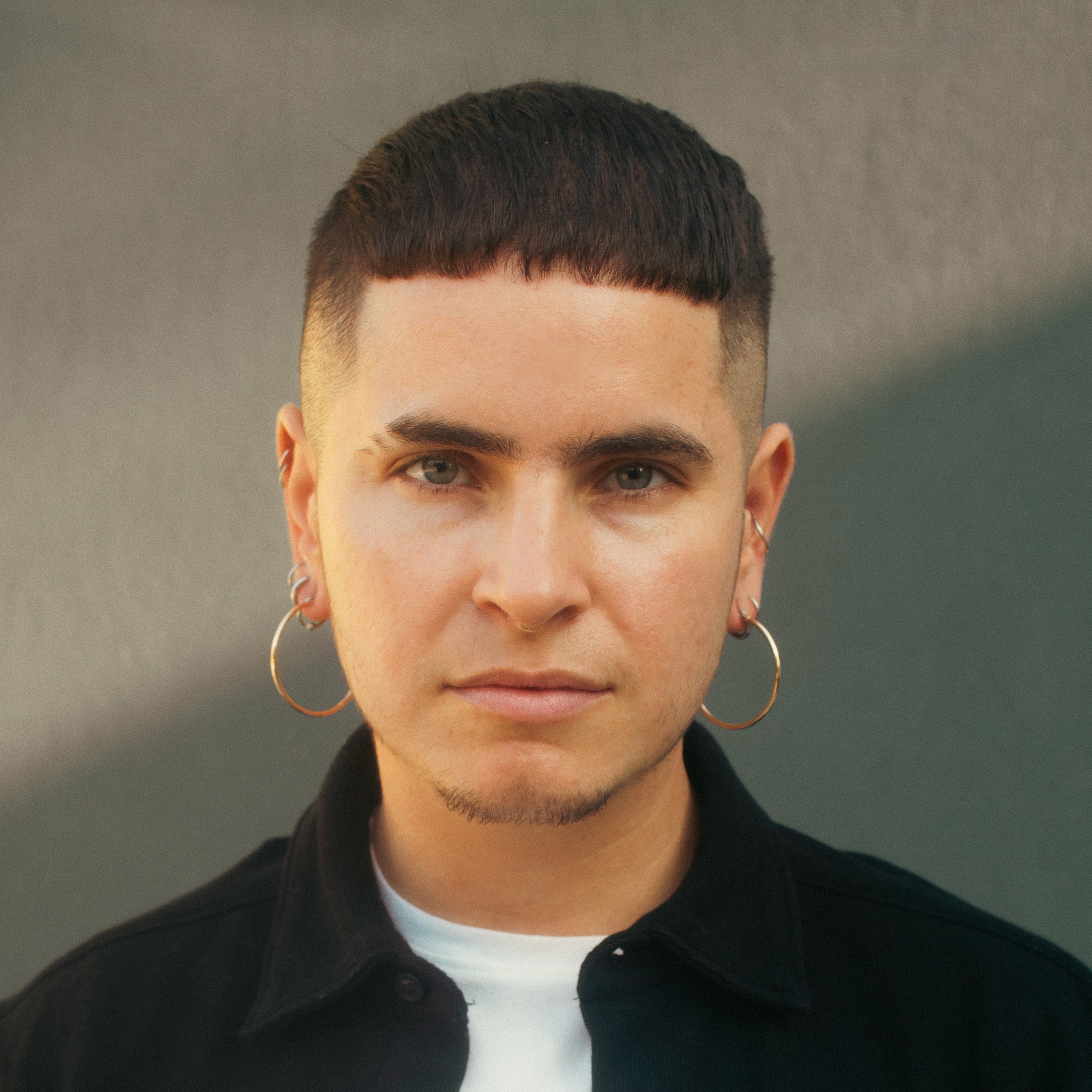
[00:00:00] Speaker A: Remy Spanglish has no real rules. It's more about sound and how things feel. And so I go in and I feel that sometimes the sentence needs a little bit more hump. And, you know, it's like what you do with poetry, I think a lot of people just do is you read it out loud and then you have to add one word or another. And sometimes the Spanish just kind of like brings in that extra depth that it needs.
[00:00:37] Speaker B: Hi, my name is Geraldo Cadava, and I want to thank you for tuning in to season four of Writing Latinos, a podcast from Public Books.
We're back for more terrific conversations with Latino authors writing about the wide world of Latinidad.
As always, we aim to provide thoughtful reflections on Latino history, culture, politics, and identity and how writing conveys some of its meanings.
Don't forget to like and subscribe to Writing Latinos wherever you get your podcasts. And now for the show.
Wow. If you're hungry for a wild ride of a book, one that's as vivid and funny as it is profound, then pretend you're dead and I carry you, just published by Live Right, is for you.
Today on Writing Latinos, we talk to author Julian Delgado Lopera about the depths of Colombia's Magdalena river, the fluidity of language and what he describes as travesty lore as and the sacred travesti gospel set in Bogota. Pretend you'd dad and I Carry youy has many hallmarks of Latin American literature, striking natural landscapes, religion, football.
But in Lopera's novel, these more traditional topics are suffused with sex and sexuality, ancestral trauma, and our universal desire to be loved.
Lopera teaches creative writing at the City University of New York. His first book, Fiebre Tropical, won several awards, and this one is every bit as amazing.
Thank you for tuning in to Writing Latinos, and we hope you enjoy.
Thank you so much, Julian, for joining us.
[00:02:23] Speaker A: Thank you so much for having me. I'm so excited to talk to you.
[00:02:26] Speaker B: It was just a beautiful and profound and raunchy and fun read.
So, you know, the last book I read in which the Magdalena river featured prominently was Gabriel Garcia Marquez's book the General in His Labyrinth. You know, it was the river that carried Simon Bolivar, el Libertador, the hero of independence, as he was dying of tuberculosis, to his, you know, final resting spot. So I think in your book, the Rio Magdalena, same river, but it's so much more alive and has more depth in your book. I think in the general in his labyrinth, the kind of river itself gets overshadowed by the figure of Bolivar. But here, the river is a real character. And so I'm curious, can you tell us about how you wanted to capture the Rio Magdalena and what made you want to write about it in the first place?
[00:03:21] Speaker A: The Magdalena river is a very important river in Colombia, the longest river in the country.
And I one have a very close relationship with water. I also grew up in the 90s where there was a lot of conversation around bodies that were getting disappeared in Colombia. And the Magdalena was known for being a place where body parts were being found.
So that's on one side and then on the other side. I remember reading Camila Sosa's book, which is a collection of short stories and in which there's a short story about the first. What she called the first Travers that's killed by the Spanish. Like the first kind of gender expansive person that was killed by the Spanish. And I was like, simmering on both the history of the river and how much the river has seen and then our relationship to colonialism. And so I was thinking about the, you know, many kind of gender expansive people that have also kind of died in the river, which is something that I think Colombians as a whole don't talk so much. We talk about the people that have been killed there, but not specifically kind of LGBT people. And so I was just really considering it and considering this girl who is growing up in Bogota and is just watching this happen on the tv, but also her mom dies and falls in this river. And so I just thought that both the river itself, as this kind of serpentine, kind of murky water they're holding so much emotion and feeling, will work great as a metaphor for those girls also kind of holding a lot of emotion and ancestral grief. Right. So they're both.
Both Valentina and the river kind of hold all this ancestral grief and violence. And I thought it was a great way of kind of embodying that, Sticking
[00:05:20] Speaker B: with landscape for just a little bit, because I felt like the environment and landscape was a really important part of the book. You write a lot about Bogota itself, and you could even think of Bogota as a character. It's gray, it's raining, it's hostile and cold, but brimming with a queer travesty underbelly. So I'm wondering if you can talk a little bit about writing about place in general, especially for an audience that might not know the place that well.
[00:05:47] Speaker A: To me, place is so important in my writing. I'm not sure why. Maybe it's because I'm an immigrant and I had to leave my place of birth. And so place becomes its own character because it shapes so much how we experience anything.
And maybe it has to do with being an immigrant, but Bogota comes in very strongly.
And it is. I think Bogota is a very strong place. It has a lot of attitude. The mountains are huge, it rains a lot. It's a city in which you can experience, you know, really strong sunlight, like 75 degrees, 80 degrees, and then rain and hail in the same day, and then cold in the evening.
So it's like very intense weather wise.
And, you know, I was so marked by growing up there. And I think that the character herself is also.
The relationship to the city is very important because it shaped the father moves from this very small town into the city. So it shapes a lot of how he's existing. And it also, for her, it just shapes some of the experiences that she's having. She lives in an apartment building that has a name. You know, the apartment buildings in Bogota have names, for instance, which I love. You know, a lot of them had women names. Now they have. Sometimes they have other names, but historically that had like a lot of female names. So there are these particularities about growing up in the specific era and also growing up where there is a lot of violence going around, but still you have to live your mundane life.
And so which is something very particular about people who grew up there in the 80s and the 90s is like, yeah, there was a lot of violence surrounding the city and the city itself. And yet we still had to just like, live our little mundane lives as well, you know, and so I'm very interested about that relationship. Yeah. And so I just, I, for some reason, just place feels like very important to me and I pay a lot of attention to what's going around and do. Valentina is like, you know, the rain itself kind of reflects her mood and the clouds themselves reflect, like, how she's feeling.
I think it also just works craft wise. It works to kind of mimic a little bit of the emotional journey of the narrator of the main character. And the same with the other thread, which is Ignacio as a child. You know, the heat is like suffocating and extreme, and so they become kind of vessels also for the emotional moment of the characters.
[00:08:19] Speaker B: Yeah, let me take a quick detour from the book really quickly because you mentioned that you are from Bogotan head, are an immigrant to the United States. So when, when did you move from Bogota to the United States?
[00:08:32] Speaker A: I migrated when I was 15 into Miami, and it was a very intense difference from living in the mountain city that has, you know, 9 million people very busy, and it was very dangerous to, you know, the outskirts of Miami, in the suburbs of Miami.
So that was a very stark difference.
[00:08:56] Speaker B: I'm going to ask you a question about language. So did you. Did you only learn English once you moved to the United States, or did you speak it before?
[00:09:05] Speaker A: I had a very kind of basic English, so I was going to a school where I was being taught English. So I knew how to say, you know, hi, how are you? My name is, and to, you know, like, I knew basic English because I remember my mom would use me to translate things when we first arrived here, but I couldn't understand what people were actually talking. I mean, you know, I was a teenager, so I learned it pretty quickly. But it was awful. You know, I've always had an accent, and I was in Miami. I was surrounded by people who were immigrants and who were still learning English. And so, yeah, I had to pick it up once I was in the United States. And that's also why I like bringing in the Spanish in it.
[00:09:48] Speaker B: And now, I mean, you write fluently and beautifully in both. And so I wanted to talk a little bit, return to the book, but then talk about language a little bit. And so, you know, the way your writing just weaves in and out of Spanish and English and then back to Spanish and Spanglish so effortly, is really beautiful. And you did this with Fiebre Tropical as well. But I read in an interview you did that. You said that between Fiebere Tropical and pretend you're dead and I carry you, you were really going to let loose, or that you did really let loose with language and kind of really dove into it. So can you talk about how you made those choices about when and where within the book to write in Spanish or Spanglish, and maybe even if you have broader thoughts about where the publishing industry is right now when it comes to using Spanish and Spanglish.
[00:10:39] Speaker A: Yeah. The first book was me trying to figure out how far can I take this and what can I get away with?
And I was just experimenting and exploring for myself, what is it like? I'm trying to. Trying to find the balance and trying to understand that linguistic departure that is like Spanglish. And I think that with this book, I allowed myself to have less filters. And I, you know, my writing process, I let myself go. And sometimes I just write chunks and chunks in Spanish, and sometimes they're just chunks and chunks in English. And then it's through the revision process that I blend a lot of them together for sound, for understanding. You know, I still am publishing in English, quote, unquote. And so the book is mostly written in English. And so for anybody who doesn't speak Spanish, there's still the context kind of. You're able to discern everything that's going on via context. But, yeah, I feel like with this one, I just, I understood the, the layers of Spanish, Spanglish even more because I had already been writing in it. And so I let myself go a little bit more. And at the same time, I'm also using a lot of, like, queer Spanglish. So not only, you know, the mixture of Spanish and English, which was the first book, but also kind of delving into a more queer texture for the language itself. And then I mostly just. There is a lot of, like, around intuition, I think. Remy. Spanglish has no real rules. It's more about sound and how things feel. And so I go in and I feel that sometimes the sentence needs a little bit more hump. And, you know, it's like what you do with poetry, I think a lot of people just do is you read it out loud, and then you have to add one word or another. And sometimes the Spanish just kind of like brings in that extra depth that it needs. But to me, you know, I treat spanglers like you would treat, like, French or Italian. You know, the book happens all in Colombia, and so it's like, well, why would you bring Spanglish status? Because I, I, I'm treating it as its own kind of language, and I'm writing from there, you know, and then just figuring it out how this was going to sound and look and have textures of Colombia in there and registers of Colombia in there, which is why I did a bunch of research for it.
[00:13:02] Speaker B: I assume the book will have a Spanish translation someday. Maybe you already have a Spanish press. And how does the process of kind of, I mean, I don't know how this goes. Like, the passages that are in Spanish because you wanted to mark them as different from English, will those remain in Spanish, or do you have to translate those to English? And how does that work?
[00:13:24] Speaker A: Yeah, the translation process is so incredible and so interesting to me. The book is coming out with Random House, Columbia in October.
So I'm currently working with the editor, Random House, and then the translator, who's the same translator that translated Fiori Tropical.
The thing with Spanglish is that it's a play between English and Spanish, right? So it's this play that happens between both languages. So what we decided is like, let's find two different, like Spanishes, and then we're going to play with both of them. Because in the Spanish translation, it didn't make sense to have English. In this specific book it makes sense, but in this one it didn't. And so we have the registers of more kind of normative Spanish of Colombia, and then we have the register of very queer Spanish in Colombia. And that's the play that is happening. Those are the play that's happening between those kind of both mixes of languages.
[00:14:21] Speaker B: Now I'd like to get into the content of the book a little more. I mean, the first thing I'd love to hear you talk about is you have these two terms or concepts. One is travesty lore and the other is the sacred travesty gospel. I don't know if you thought about travesty lore and the sacred travesty Gospel as kind of similar concepts, but could you talk to us a little bit about those just to orient our listeners a little bit?
[00:14:48] Speaker A: So travesty lore, we kind of open the book with a prologue in which the kind of one of the main characters, the trans woman, the travesty who is the mother of the house, is telling us a little bit about this maldicion that has come upon the family and speaks a little bit about the history of that and ties it to colonization. That's where the river comes in.
And it's all about the queens who do not really own their destinies as travesties. Right.
And the reason why the way that I was approaching law is because I think a lot about trend culture and trans language and the things that are very much ours and our history and I think about myth making and lawmaking inside the trans historical like ecosystem. And so while I was doing research while I was in Colombia, I talked to a lot of people there as like trans people. And I think it's just like in listening to the stories, you know, every. A lot, every culture has their own myth, right? And their own lore. And so I am very interested in us creating our own. And there's still already some there, right? And so what I was doing with the lore was kind of tying some things that I have heard from being a transsexual so many years of my life from being part of a trans lineage. I had a trans mother, I have trans sisters from also being part of a lineage in Colombia. And so one of the things that I know and for trans people is so much about generating and piecing together things. And so That's, I think what the lore was to me is just being able to take that imagine imaginative leap and dream. I was like, oh, what? What is the Lord that we hold, like, ancestrally and right into that and also picking up from other trans writers. And so that is the Lord. And I think that the gospel to me is just like the dragonsp Gospel is just like, is the energy that. The transsexual energy that is here to change your life and that you must, you know, like, submit to it. And so I feel like the Lord is kind of like the overall myth, like the storyline and like, you know, the histories are bigger than that, are kind of like holding us from the underworld, the transsexual underworld. And then the travesty gospel feels more like it's like the energy that it's carrying through. That makes sense.
[00:17:23] Speaker B: Oh, that's amazing. I mean, you connected those two in ways that. That I didn't even ask for. But it's. It's beautiful how you've kind of conceptualized them and have a whole theory of the relationship between them. It's great.
Writing Latinos is brought to you by Public Books, an online magazine of ideas, arts and scholarship. You can find
[email protected] that's P U B L I C B o o k s.o r g to donate to public books, visit publicbooks.org donate I wanted to, again, just to kind of orient listeners a little bit, and you can choose to tell us whatever you want about these characters, but I wanted you to introduce listeners to a few different characters, especially relationships. I'd like you to talk a little bit about the characters Ignacio and Valentina, but almost more importantly the relationship between them, and then again the characters Ignacio and Felipe, but more importantly the relationship between them. Can you tell us a little bit about those?
[00:18:27] Speaker A: Of course.
So Valentina and Ignacio. Ignacio is Valentina's father.
Valentina's mother died a few years back, and there's a whole mystery around her death.
And so he is raising Valentina, but he's also very deeply depressed. He is a closeted cross dresser, and so he dresses up in the house, only in the house.
And so she has this relationship where she has kind of like, inhaled a lot of his sadness and is trying to figure out how to get his father to leave the bed and and, you know, become the man of the street, the, like, dancer that he was, the. The father full of life that she used to have before. And she's also carrying the secrets and kind of like the weight of the mother's death, which is all. It presses on the narrative constantly because they're very present for them. But she loves her father so much, and she's scared of losing him the way that she loves her mom. And so she thinks this constant struggle of, like, seeing him kind of get worse and worse and not leave the bed and drink a lot and at the same time connect with her through all those beautiful moments that they get to have. And so that. That relationship. And then there's a relationship between Ignacio and Felipe, because there's two storylines, right? So the one storyline is from Valentina's point of view, and she has a relationship with the father. And then the other storyline is from Ignatio's point of view when he was a teenager back in the small town where he's from.
And Ignacio is, you know, kind of in his early teenage years.
He loves to play soccer. He's like a little machito boy, just trying to be the same as his father. And he's older brother, you know, very small town feel.
And then all of a sudden, he meets Felipe. And Felipe's coming into the small town. He comes from a bigger city. He comes from energy, and he's like, oh, this place sucks, right? This, like, little small town. I'm way better than this.
I'm doing theater.
He wears, like, little purple shorts. He does his nails pink. He also has this relationship with his mom where they're like. He's very feminine in front of his mother. So Ignacio is, like, shocked that they're able to have this relationship. And so Ignacio and Felipe develop a friendship where they're both really attracted to each other, and then they both start having feelings for each other. And Ignacio lets himself go and finally kind of give in to the feelings that he's having, both around his sexuality, but also around his gender. Felipe opens up this whole world for him, around feeling differently, both in his body and in his attraction. Attraction to someone else. But then, you know, because this is a novel and because everything that's bad for life is great for fiction, horrible things happen.
And Ignacio is not able to really sit and be who he really is.
And so we. I don't. I don't. Want to. I don't want to ruin it for anybody who hasn't read the book. So I won't give the ending. And so this is. Yeah, so they have this relationship that is really beautiful, that is like the one relationship in a master's life that is, like, full of life and trust and vulnerability and beauty and where he's actually being able to be seen. And yet he's social. The social contact is just so not made to hold who he is. And so there's this constant struggle for him which leads him to do really horrible things.
[00:22:31] Speaker B: I wanted to go back to Ignacio and Felipe and I want to look at a couple particular scenes for very specific reasons, because as I was reading, I mean, in some ways I thought the book had all of the hallmarks of just a classic Latin American novel. You know, you have again, the landscape, the mountains, the river, they play central roles. You also have religious figures and, you know, the religion in general kind of playing a central role. You have football, you know, there's a soccer player. And so nevertheless, I feel like sex and sexuality kind of infused all of these really just kind of classically Latin American subjects. You know, religion, landscape, football.
And so there are a couple passages that really jumped out to me where you can see this at work. So I'd love to ask you to read a couple of them.
So. So the first one I wanted you to read is a sentence or two on page 148.
Maybe we could start there.
[00:23:40] Speaker A: After Ignacio carried Felipe in a pivot bike ride along the muddy end of the trail. There it was in all of its refreshing glory. Snuggle between the mountains but Chi el Rio.
[00:23:54] Speaker B: So we'll stop there and then we'll go to 276 and then we'll talk about both of these patterns passages.
[00:24:00] Speaker A: Felipe undressed all of a sudden. Ignacio too lost his clothes and Felipe pulled Ignacio with him into a hole of hot water springing right from the earth.
Felipe's fingers running on Ignacio's tense body.
At first no sound, at first just a pulse of electrifying terror, as if all the tattoos of pleading saint at the Santa Isabel de la Carrida church had suddenly lost their clothing, had miraculously come to life and appeared beyond el cula del mundo to be rimmed and entered a muted choreography of inverted pleasure. A sweaty herd of stained in and out of the hot spring.
San Lazaro whipped by an angel in mer cowboy woods. Santo Tomas by the fountain with two cocks in both holes.
San Francisco de Assis on knees and yearning.
Even Jesu Cristo was there. A sissy with a delicious six pack and long wavy hair thrown back as he got sucked off by a repenting St. Judas.
And look at some Pablo, a limp wrist and Nina chuckles riding San Pedro serpents rising from between legs to be cuddled and worshiped. Look flowering from the pitch dark abyss of locuda and the SEO, everyone pleading to be loved.
[00:25:24] Speaker B: Thank you so much. I loved both of those. And now that I've drawn everyone's attention to these particular paragraphs, what struck me is, I mean, first of all, I've never heard of some sort of natural formation in a mountain described as a mountain's butt cheeks. And then also to describe Jesus as a sissy with a delicious six pack and long wavy hair thrown back as he got sucked off by a repenting Saint Judas, that's a reimagination of important religious figures described in a way that I hadn't seen them before. So to me, this is an example of how you have these classical themes in Latin American literature like landscape and religion, but you're really taking some, I think, some imaginative, metaphorical risks with them, so. And especially by kind of highlighting how, you know, they can all be seen through some lens of sex and sexuality. So I'm just curious to hear you talk about, you know, why, why you made the choice to do that. Is it because, you see, and first of all, I don't mean to imply that it. It works the same way in both of these examples. You know, it's very different to call Jesus a sissy than saying a mountain has butt cheeks. That, that's. Those are maybe different things, but nevertheless, it's a kind of sexualizing of these things that we don't often sexualize. So I'd love to hear your thoughts about it.
[00:26:50] Speaker A: Well, thank you. I think I was following the storyline and then afterwards you're like, oh, yeah, all these things are being there, but I remember some of the process. The mountain tree.
I'm sober now, but I was doing mushrooms in LA and I was in Joshua Tree and I just remember looking at the beautiful rock and just being like, oh my God, that looked like chunky butt.
And I was writing this part and so I was just like, okay, this feels like butt cheeks. And also because it's very gay, I can't, you know, like, I feel that a lot of this is very kind of gay men language and sensibility and the moment where the people and the orgy are kind of turned into all those things. I think for me was mixing the level of homoeroticism and the Catholic Church that I grew up in. Right. So you are growing up with all the saints and these angels who are very homoerotic. The robes people are getting whipped. And then I live in San Francisco and I would attend also fairy gatherings where there's a lot of gay men naked, having all different sorts of sexual connections. And so it was a moment for me. You know, there's also this moment in the novel where Ignacio goes there and is so shocked to see this. But again, this is part of gay culture that has been going on for so long where it's specifically gay men culture, where gay men go into places to be able to have cruising and sexual liberation in all the specific ways. And so I find that it was both mixing the homoeroticism of the Catholic Church that I had grown up with, with some sensibility from San Francisco to be on my death, with just very much historical gay men culture of finding cruising, like public spaces as cruising area of.
[00:28:59] Speaker B: Yeah, I loved it. I mean, it was also just. It was just beautiful language, too, and just a beautiful mixture of. In the same way that you weave in and out of Spanish and English and Spanglish, and then the way you describe Trasvesti lore as just a kind of borrowing from lots of different places, too. It felt like part of that as well. Okay, then I think the final question I have for you is one that I have to ask, since the podcast is called Writing Latinos, and your book is in English, but set entirely in Colombia. And it makes me want to ask if you felt like you were writing with a Latino audience in mind and a series of related questions like, do you consider yourself to be a Latino writer? And is this book Latino literature?
Why and why not?
[00:29:53] Speaker A: Yeah, I mean, I think when I was writing, usually when I'm writing, I try to just follow the story, to be honest. I think I.
I think about the audience when I have to talk about, I have to pitch them to the editor.
I, you know, I was just, like, very fascinated by the stories that I was following.
And the people are from Colombia, they're queer, because those are. That's what the story needed. Those are the stories that are more fascinating to me. Of course, I'm also trans and queer, so, like, I'm very interested in a lot of the storylines. I'm also just very interested into why people stay in the closet, the fear that there is to actually come out, the horrible lead that people have to take. So I think I was, like, very genuinely, very invested in the storyline. I see myself as a Latin American writer. I very much see myself as an immigrant here. I think I'll share a lot of, like, heritage and cultural affinity with a lot of Latinos here.
When people are talking about Latinos in the US Then I'm part of it. But if I have to self identify, I feel like I'M very much Latin American because I grew up there and I have the very stretched bond with Colombia, and because I see myself so much as Colombian before anything. But I. I think that this is. I think that the identity categories for me don't feel solid. They're just kind of like tools to be able to speak about experiences. And so I. Inside the United States, I'm very much a Latino, so I have that experience as a Latino person. And I also have the experience of being an immigrant and just being Latin American. And, you know, and then when I'm back in Colombia, I have the experience of being in the US but also I pass completely as a Colombian. When I'm there, nobody can tell that I live anywhere else.
And so it's an interesting thing where I feel that I.
I am inhabiting many different identities, sometimes multiple identities, constantly. I feel that I'm definitely building on a legacy of Latin American literature and Latino literature in the United States. You know, Spanglish comes from me having read a lot of people here, including, like, Gloria and Saldua, when I was, like, you know, 19 years old, that, like, blew my mind. And so there's especially a lot of, like, Chicano writers when I was in California that really blew my mind around what they were doing with language. So people have been mixing language since the turn of the 20th century. You know, I'm not inventing this, and I'm definitely building on the legacy of that inside the United States. I also feel that I have a lot of aesthetic and linguistic craft choices that come from Latin America. Really long sentences, sometimes just expository writing, you know, so there's. There's some things that are just being brought from there. There's also, I believe, a very queer aesthetic, campy aesthetic that comes from both living here and also Latin America. So to me, I really love that I can be part of different communities and move through them. And definitely I'm building on, you know, the communities that you're mentioning, the Latinos in the US And. And the literature that has been created here.
[00:33:07] Speaker B: I love that you brought up Gloria Ansaldua, because especially in the first couple of paragraphs, I was thinking about her writing about the serpiente and stuff, and where you're talking a lot about the animals, the birds, the tigers, and things like that. I was like, huh, this feels a lot like Borderlands La Frontera to me. I wanted to ask, too, speaking of, like, identities that cross borders, do you find that travesty and trans. Do those have different translations and ways of experiencing those identities in Colombia and the United States.
[00:33:47] Speaker A: Yeah, I mean, I feel like Travis is a very specific Latin American experian and word. Camila Sosana speaks about this beautifully. When she had her book translated, Las Malas Bad Girls into English, I interviewed her for it and we talked a little bit about it, where they wanted to translate the word trans woman in the book. And she's like, no, this is very specific to Latin American experience. And so I feel like travesti is more old school. It comes from a lot of trans women who had to live, not passing, who had to do a lot of sex work. You know, the trans experience that comes from also like my aunt, trans mother, you know, in the US and so I think that definitely traversd a very specific Latin American experience that I think maybe some Latin American people can have in the United States. But it's definitely very connected to the streets, is very connected to sex work, is very connected to not passing, is very connected to getting hormones through the black market, is very connected to kind of a different sense of, of reality. And I think it's important that we let people use the words that they want to use to still identify and create their own reality. And then I think in the US a lot of communities also use different languages. My, you know, my trans mother, who is Cuban, she talked about locas, which is a very Caribbean word for trans women, also were transsexual. She would say the transsexual, the transsexuality, la loca, which is translated as the crazy one, which is terrible, but that's how she would refer to herself and also other trans women. And so I just believe that. I just love the plethora of terms and ways in which people have. Because it also carries its own cultural heritage. Right? The word travesti carries their own Latin American heritage, their own heritage of the streets, their own heritage of survival, their own heritage of that. And, and so I believe that it was very important to have that make space in the room and to honor.
To honor that and to just to make space for that. And in a. In the ever growing trend movement that I feel sometimes the United States takes over with wording and language somewhere else. And I believe that people should just be allowed to use whatever they want to use to define themselves.
[00:36:13] Speaker B: Thank you so much, Julian, for joining. Writing Latinos Pretend you'd're dead and I Carry youy is a beautiful book and congratulations. I enjoyed it so much, thoroughly.
[00:36:23] Speaker A: Thank you so much for having me. This was so much fun and I really appreciate it.
[00:36:39] Speaker B: Thank you for listening to Season four of Writing Latinos.
We'd love to hear your suggestions for new books that we should be reading and talking about. Drop us a line at geraldoupublicbooks.org that's G E R A L D oublicbooks.org this episode is brought to you by Public Books. It was produced by Tasha Sandoval and our music is City of Mirrors by the Chicago based band Dos Santos. You can follow us on Blue Sky, Instagram and X to receive updates about season four of Writing Latinos. I'm Geraldo Cadava. We'll see you again soon.
Is the.