[00:00:00] Speaker A: Movement across landscape for every living organism is natural and it is innate. It's in us. Whether it's a Mexican fruit fly looking for some citrus so she can lay eggs in it, or if to reproduce and continue her population, or if it is a human being looking for a better life and finding more access to better resour.
[00:00:33] Speaker B: Hi, my name is Geraldo Cadava, and I want to thank you for tuning in to season four of Writing Latinos, a podcast from Public Books.
We're back for more terrific conversations with Latino authors writing about the wide world of Latinidad. As always, we aim to provide thoughtful reflections on Latino history, culture, politics, and identity and how writing conveys some of its meanings.
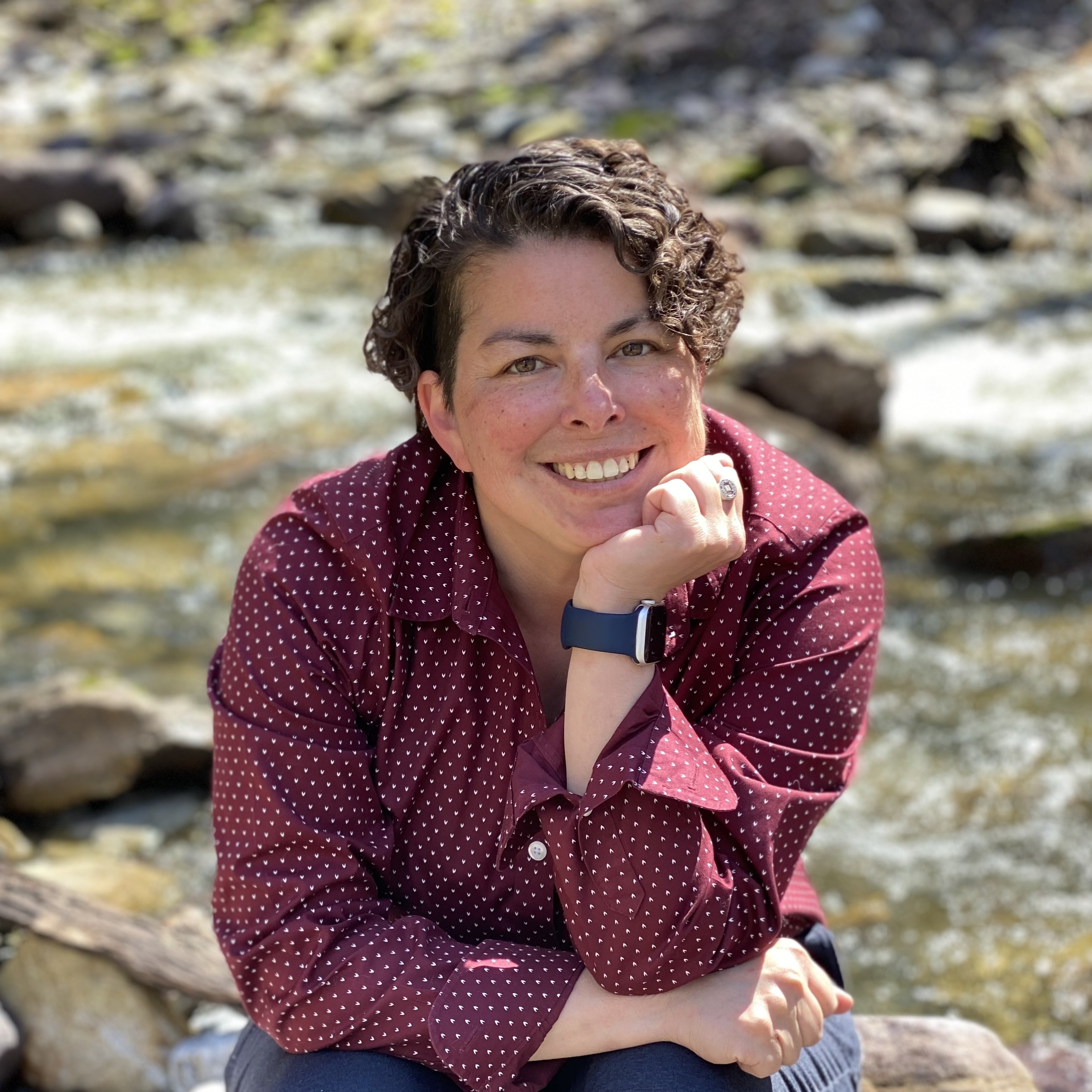
Don't forget to like and subscribe to Writing Latinos wherever you get your podcasts. And now for the show, It's such a delight to have Mary Mendoza on Writing Latinos to talk about her new book, Deadly How Insects, Pathogens, and People Defied the US Mexico Border, just published by the University of North Carolina Press.
Mendoza teaches history at Penn State, and Deadly Divide is her first book. I've known Mendoza for a long time. We run in the same Borderlands and Latino history circles. She's also an environmental historian. In this episode, we talk about how she brings all of these fields together, how humans and animals can be racialized in similar ways, how historically immigrants have been described as animals, and how ultimately nature could not care less about the borders drawn by humans. And this in itself offers an important lesson about their fragility.
It's also interesting, and we thank you for tuning in to another episode of Writing Latinos. Hope you enjoy.
So, Mary, thank you so much for joining us on Writing Latinos to talk about your new book, Deadly Divide.
[00:02:19] Speaker A: Thank you so much for having me. I'm delighted to be with you today.
[00:02:22] Speaker B: The first thing I want to talk to you about is how your book kind of fundamentally blurs the line between animals and human in. In ways that I hadn't thought of before and I think in ways that a lot of listeners will be surprised by, namely that both animals and people can be racialized in certain ways. I thought that was really interesting. So can you tell us how that process of racialization worked at different moments in Borderlands history, the ones that you write about in your book?
[00:02:55] Speaker A: Yeah. So I think when we think about race, we think a lot about phenotype. We think a lot about, you know, I ask my students every semester to define race in the beginning of the semester and at the end. And sometimes my students will even bring in like things that are cultural, like what is your religion or what language do you speak?
Or we think about it just very much in the realm of human beings.
And I think the ways that we sort of create hierarchies, what's better or worse, what is preferred or not, what is dirty or clean, what is good or bad, can be applied to the non human world as well. And so in my book, what I try to do is show how a disease spread amongst cattle through a cattle tick called Texas Fever kind of created conditions along the US Mexico border that somehow created ideas about the landscape as racialized. So, so what I basically show is cattle migrating from south to north carried a tick on their bodies that northern cattle had not been exposed to because the, the tick couldn't thrive in colder climates.
And once the United States figured out that this was happening and they kind of did a bunch of research, and I won't take you through that whole process just because it's very technical, they sort of said we should really eradicate this tick from our country entirely because we're finding that cattle from places like Texas or Southern California or Georgia, places that have warmer climates throughout the year, are, are basically ultimately these cows coming from these places are infecting cattle in the north. And it took a whole big long time to figure that out. So this, this was happening for a long, long time.
And so they did, they, they kind of created this scientific method for rotating cattle in pastures and keeping pastures completely void of cattle to sort of make sure the tick wouldn't thrive or be able to find a host. And they essentially starved them out and pushed them out of the United States. But Mexico didn't do do it largely because all of Mexico's climate and all of Mexico's territory had like a warmer, you know, it was more amenable tip for this tick to live in the entire country. And what I've left out here so far is that what they learned in the scientific process is that cattle that had been exposed before six months of age to this tick and its disease would develop an immunity. But adult cattle, if they were exposed, would become ill and die. So this is why cattle in the north were dying when cattle from the south moved north.
And so all of Mexico's cattle basically were immune, and so they had no reason to eradicate the tick. So over time, we get the tick out of the United States and then the border becomes a problem and there's a whole bunch of cattle trade across the border. And so when people want to buy Mexican cattle, they have to quarantine them, put them through dipping stations at very specific ports of entry, and then wait 60 days to bring them anywhere. So that was frustrating for cattle traders and then cattle ranchers who lived on the border. And Rachel St. John talks about this in her work line in the sand a little bit. Sometimes. Cattle ranchers lived on both sides of the border. Cattle grazed on both sides. So anytime they wanted to move their animals north, they would have to also put them through this process because they had been in Mexican territory and thus had been exposed to the tick. So after a while, ranchers start to get really mad and they say, but my cattle are American cattle. And I really want my American cattle to just be able to come across the border, right?
They were born here, they were raised here, they're American. They're not like those Mexican tick infested cows. So if my cow strays across the border, I want to be able to just bring it home, for example.
But the U.S. department of Agriculture said, no, you can't do that, because then you risk bringing these ticks which reproduce like crazy. You cannot bring them in because then we'll risk thousands and thousands of more ticks that will then just reproduce again and again.
And so ranchers started kind of writing letters and complaining and saying, these Mexican cattle are causing this. It's not American cattle. We should be able to do what we want. And so over and over, you see this language kind of showing up. And the USDA responds with, no, this is the scientific method. We have to follow it. After a while, USDA decided to build a border fence in Southern California where most of this kind of moving back and forth for cattle was happening. And they basically said, we're going to help you to keep these cattle from crossing, but that's all we can do here. And so ranchers sort of racialized the cows. And I say racialized. I remember having a conversation with Richard White about this, and he was like, race and nationality aren't the same.
And in my book I sort of say they aren't, and yet they blur, right? So Mexican is also. People call Mexican people Mexican, but they also call sometimes Puerto Rican people Mexican. Right? It's just sort of like you're Latino and that is your identity and that's an ethnicity, right? And then. And so everything sort of gets blurred. And so I think race is experienced and it's sort of created and constituted kind of with all of these things together. And so what happens is the cattle become racialized through this language of Mexican cattle are tick infested American cattle are good.
[00:08:26] Speaker B: Yeah. And I'm glad you brought it up, Richard White. And I just should say to our dear listeners who are not historians of the west, that Richard White is one of our eminent historians of U.S. environmental history and the history of the American West. He's just a luminary who shaped a generation of thinking, thinking about the west and the environment.
So I'm glad you brought up that example of an American cow and a Mexican cow because I think just that statement like oh, that's a Mexican cow, that really struck me. And what I'm interested in hearing you talk a little more about is the way that the racialization of cows, the racialization of people, for example, they kind of co produced one another in terms of like racial thinking. Because you know, when a rancher says, well, I have an American cow and you have a Mexican cow, and then he has in mind certain ideas about what it means to be a Mexican cow. Those ideas can also get applied to people, you know. And you have a lot of examples in your book of the ways in which animals and people are treated similarly at the border. I mean, you brought up the example of how the cows themselves, I think they have to get dipped into like tar or something. Right? I mean, something that's not pleasant. Arsenic, Arsenic. Arsenic, not pleasant. And you have this amazingly vivid scene. I'm, I'm just kind of sharing with our listeners where the cows, instead of kind of voluntarily going through this process are essentially, it sounded like they have their legs kind of swept out from under them and they slide down this ramp and then go through this, this pool of chemicals and then have to emerge on the other side. And you know, we've seen pictures of braceros or Mexican labor migrants walking across the border and getting fumigated with ddt. And you describe the kind of almost like cattle pen like conditions that they're kept in before they cross the border. So I was interested in the kind of co production of race between animals and people and how ideas about animals can get placed on people and ideas about people can get placed on animals. So I'm wondering if you could talk a little bit more about that.
[00:10:46] Speaker A: I think landscape is a really good kind of avenue into this. I think we think about specific landscapes in certain ways. Right. So when this cattle thing happened and ranchers were like, well, if our cows go into Mexico and the Mexican landsc, they will become potentially at risk for contamination according to the federal government. We disagree. We think it's innate to Mexico and Mexican cattle. But that is also because it is within the landscape itself, which means that everything in that space becomes sort of associated, as you say, Jerry, with this sort of idea of a stereotypically filthy Mexican cow or person. Right. So these things get projected onto people. And so a few years after the tick thing happens, there is a typhus epidemic, and it's in south Texas. And 68 people get really sick, 14 die. And even though typhus is completely endemic to both nations, there are typhus outbreaks in New York and San Francisco, places really far from the border.
We see the US Federal government rush to the Texas border and say, no, this is actually brought in by people of Mexican origin and we should essentially dip them.
So they're using these systems of control and systems to clean, to transform Mexican bodies from filthy to clean as they come across. So they're not carrying this disease into the United States. And then that sort of starts this very institutional regime of cleansing Mexican bodies that lasts well through the Brassero program. As you say, Mexican bracero is coming in, getting sprayed with ddt, being placed in corrals, things like that.
[00:12:28] Speaker B: I do think a lot about more recent examples too, where this happens. Like, I remember in the first couple of years that I lived in Chicago, that's when there was the outbreak of like swine flu. It was called in maybe 2008, 2009, but then it was also called Mexican swine flu. The Mexican flu? Yeah, the Mexican swine flu. And you know, in Chicago, I remember the first outbreak was in an immigrant neighborhood in Rogers called Rogers park. And it caused a little bit of a hysteria. And then similarly, we know with like Covid, the China flu is how it was described. And so I've always been curious about this relationship between race and science, because when I lecture to undergraduates in Latino history, for example, and I talk about the construction of the Panama Canal and how it was necessary to eradicate yellow fever in order to do that. But then I talk about some of the. How the ideas about this disease, this mosquito borne disease, kind of transferred over to the people as well. I always feel like I'm very aware that I have in my classes, like pre med students who want to study the outbreak of disease. So I never feel comfortable. It almost sometimes feels like I'm telling them that science is all made up because it's just racist, you know, it's just racist. And they want to know how to treat yellow fever, where to locate it. So I'm very aware of this, like, slippage between race and science. And I guess what I'm Wondering. I'd love to hear you talk about, since you've been thinking about this for a long time, researching it, writing about it. When can we appropriately ascribe the outbreak of disease to a particular community without racializing it?
[00:14:18] Speaker A: So I just wrote a piece a little bit about exactly what you're talking about. As you know, I'm very interested in this as well. And I really think this is so deeply ingrained in the way that we. That we classify and think about people. So I go back to phrenology and taxonomies of people and sort of categorizing human beings in very particular ways, right? Native American, Caucasian, Mongol, et cetera, and. And sort of creating this hierarchy based on things like skull size or skin tone.
And I think that that's deeply ingrained in science and our scientific way of labeling, like scientific nomenclature. So I actually just wrote a piece about the ways that scientific nomenclature can both uphold racism and ableism in particular ways by thinking about how John Langdon down named what we call Trisme 21, or down syndrome. He called it Mongoloid idiocy. Right. And the reason he said he's calling it that is because children who have this quote, resemble a real Mongol, right? So he's looking at physical features, the shape of the eye, the way that the nose sits on the face, things like that. And he's. He's basically saying, we're going to call this medical, congenital condition, this thing. And so it's not even. That isn't even an or has no origins. It's across the globe. This is happening. And he's attributing it to looking like a real Mongol. Right. And so we racialize things in science not only because of region, but this is sort of a global issue. And I.
That's how I kind of teach it in my classes and think about it.
[00:16:06] Speaker B: Yeah, that's super interesting. It reminds me, too, I mean, I might be wrong about this because this is not my area of expertise, but I think, aren't there some nations that actually don't collect information about the ways in which certain diseases affect members of certain ethnic or racial groups? And then also, like in their censuses, they don't really collect information about different racial groups. And I always go back and forth about whether that's a better way of doing it or whether the way we do it is a better way of doing it. Because it seems like in America, like, yes, if we do collect this information, it has proven to be useful in certain circumstances. Just take, you know, the most obvious example of like sickle cell anemia or something. If you know a particular disease affects a particular population, then you have a better chance of treating it. But then it still feels very slippery in some ways.
[00:16:57] Speaker A: Yeah, and I think it is, and I think it's dangerous. And I think, as you note, it's very challenging to then figure out what's the best course of action for controlling some kind of epidemic.
What's the best course of action for making sure people are targeted, like diabetes. Right. People say it affects people of color more, Latinos as well as African Americans. And so maybe targeting certain communities and thinking about nutrition and exercise and ways to sort of stave off these kinds of things can be useful.
And it can also be detrimental. Right. People get then associated with particular things. There's a lot of misinformation out there about some illnesses being contagious that aren't. Right. So people become stereotyped and racialized in really meaningful ways that affect their day to day lives.
[00:17:48] Speaker B: Writing Latinos is brought to you by Public Books, an online magazine of ideas, arts and scholarship. You can find
[email protected] that's P U B L I C b o o k s.org to donate to public books, visit publicbooks.org donate another thing I wanted to ask you is again, and this is a quick note to our listeners who are not academics, we in history tend to like, think of our fields in terms of borderlands history, where you focus on international borders, wherever they are, or in more metaphorical senses, not just geographical senses. We also talk about historians of science and we talk about environmental historians and our fields. Those, those fields can be separate. But one of the things I really loved about your book, Mary, is how it kind of brings together many of these different fields. And much like you blur the line between humans and animals, you blur the line between borderlands history, environmental history. So can you talk a little bit about why it's important to bring environmental history more into our study of borders?
[00:18:59] Speaker A: Yes. So for our listeners, Right. Environmental history, as it is often defined by environmental historians, is the study of the changing relationship between people and nature.
However, I think for me it's a little bit more dynamic than that. I think environmental history at its best really thinks about the ways in which various environments that could be out into the quote unquote wilderness, it could be in a jail cell, it could be on a slave ship crossing the Atlantic. How various environments mediate and change, dynamic, diverse human relationships. Right. Because environment is not a monolith, nor is humanity. Right. So the changing Relationship with human and nature a little bit flattens the dynamism, I think, that the field can kind of bring out of the past to explain some of our most vexing problems. And so that's how I try to practice when I'm writing. How is the environment mediating relationships? But even in relationships, power dynamics, right? We talk about race and racialization. We've just talked about hierarchies. What do we mean when we're talking about a power dynamic? We're talking about these exact things, right? So how does the environment mediate that?
Borderlands history, on the other hand, often explores exchange between different cultures, meeting places, places where lots of ideas are crisscrossing different populations. It sort of creates its own hybrid culture, right? And so I think environmental history and those. And in those hybrid cultures, right, there are often power dynamics, and power dynamics are created through fighting about nature, fighting about access to resources, access to water. Water on the US Mexico border is a big topic. For instance, access to specific kinds of landscapes that we see as fertile or is able to produce money and profit, access to status. What does it mean to be an American and to fully belong? Right. And so there's always something associated with natural resources and space. And so I think environmental history can really explain some of these dynamics that borderlands historians talk about.
[00:21:33] Speaker B: Do you ever have hope that the more that we understand borderlands is like a.
A dynamic environment where, you know, we're the only ones who are concerned with people crossing it, but our obsession with people crossing it and controlling the flow of people crossing it causes us to, like, ignore all of the other elements on earth that are continuously crossing the border? So, I don't know. Do you have any hope that the more we pay attention to the environment of the borderlands and think of the borderlands as a dynamic environment, it could then kind of maybe reverse engineer some of our ugly debates about human immigration?
[00:22:21] Speaker A: I think, yes, I think that all the time. I think there are so many ways that nature, like humans, defy political boundaries, right? Lines on maps, they mean nothing to ticks. They mean nothing to cattle. They mean nothing to Mexican fruit flies, which I also talk about in the book a little bit. And. And humans kind of force this thing that seems super unnatural, right? Let us put this static object in the middle of this landscape to stop things from moving across it. But movement across landscape for every living organism is natural and it is innate. It's in us. Right. If we need food, I always tell my students, think about just getting up because you're hungry. You're thirsty, you need to drink from the. You are getting up and moving to meet your needs. And migration across political boundaries is very similar, right? Whether it's a Mexican fruit fly looking for some citrus so she can lay eggs in it, or if to reproduce and continue her population, or if it is a human being looking for a better life and finding more access to
[00:23:30] Speaker B: better resources, this is switching tracks a little bit. And, you know, your book does just the kind of organization of it. It kind of moves from early chapters that focus on animals and pathogens to focusing more on humans. And in one of your chapters, and this is an example, you write. You write one chapter about women, braceros. And this was an example of a chapter that's going to cause me to rewrite my lecture on the bracero program. Because I'd always thought about Mexican immigration, say until the 1960s or 1970s, as an overwhelmingly male process where, you know, single men coming to work for a period of time, maybe bringing their families across later. But you write about women who applied to participate in the bracero program to come and work in the United States and had. And some of them had their applications approved. And so this also seemed to me to, like, push back the chronology of women's labor migration, which, again, I'd previously thought began later with the establishment of maquiladoras. And so could you talk to us just a little bit about how you came to conceive of that chapter, what kind of archives you discovered that led you to want to write the chapter, and then just finally what the importance in your mind of acknowledging that women came to work in the United States earlier than many historians had thought.
[00:24:57] Speaker A: So women during the bracero program really are an interesting case of going into the archive and being like, why is. Why is this here? And sort of digging more and looking and being like, oh, my goodness. So they actually were traveling and migrating concurrent to the program, but they were using a really different avenue. They were not technically braceros, but what they were doing was they were using a loophole in the Mexican Constitution, the version from 1947 that basically said, if you are a Mexican citizen and you get a contract to work outside of Mexico, the Mexican government, if you show proof, might approve that migration, Basically, they'll give you documents, because Mexico at the time was really trying to control out migration. And the Brussero program, for those who don't know, is a guest worker program for men from 1942 to 1964 that lasted so a good 22 years. It started off as a program to Fill labor gaps for men who had gone to fight in World War II. And it was so successful and productive that people lobbied to keep it much longer than the duration of the war.
So women were not allowed to go. This was, as you say, Jerry, it was specifically for men. And so when we think about labor, as you say, it's sort of. You picture a man coming and leaving his family and working in the fields and. But as more and more men, and more than 4 million men came in those 22 years to the United States to work all across the country for short term contracts, and then they were supposed to return home. And many, and most of them did, but women started to say, you know, I'm just here. I'm here by myself. I'm. I'm now running this household, or maybe with my children, or maybe I'm just here and I'm by myself. And my. My partner, my husband has gone across the border, and I would like to work and I would like to find ways to be in the United States, maybe near him, maybe on my own if I'm not attached to anyone. But women more and more wanted to be a part of this. And so they found this loophole that said if you got a contract, the Mexican government would approve your application and give you some documents. It's also important to note at this time, there were Mexican border patrol agents and U.S. border Patrol agents kind of patrolling, because again, Mexico really wanted to control out migration and maintain their own labor force as well.
And so when women got permission from the Mexican government through this loophole, they would walk up to the border, and Mexican border patrol agents would be like, can I see? Like, what are you doing?
And so they would say, here are my papers. And they could just go.
But when they got to the US Border, which is the same border, but to the tried to cross into the United States, border patrol agents north of the border would basically say, you're not a bracero. You are not allowed. Only men of a certain age who are healthy and meet all the conditions can come, and you are not that.
Men could also use this avenue and sometimes did. But mostly women utilized it, because women, as they walked across the landscape or drove across the land, however they traveled, stood out much more than men. Men could be like, oh, I'm just going to the bracero recruitment center up north. And that's why I'm traveling through this space. Like, you know, and they'd kind of blend in with the aspirantes, the people aspiring to become braceros. And so men didn't need to utilize this loophole in the same way. It made the journey for women much easier. And then they would have to cross surreptitiously into the United States because U.S. border Patrol agents would want to stop them.
[00:28:42] Speaker B: Do you know the kinds of places they went to and the kinds of work they did in the United States?
[00:28:47] Speaker A: Yeah. So some of them were working as maids in people's homes. Some people were working in hotels. I looked at a lot of different contracts I sort of went through. So I found this in the National Migration Archivo del Instituto Nacional, which is a little bit hard to get into if you want to do research there. And you're a historian listening. So be ready to go through a whole process to get into that archive. But there were a number of series of files that had, like I said, just women's stories and these applications for women. And then it referred to this article in the Constitution. Then I looked at it anyway, so this is how I came to this. And so they were working in all kinds of. Mostly, like, domestic work.
I think it's really important. Which is part of the first question you asked me to note that this happened because this was the reason that the United States started building fences to control people. So earlier I mentioned we built the first border fence to control cattle and their ticks.
But in the 1940s, as women increasingly crossed, Border Patrol agents got really anxious. And they were like, first of all, women are crossing in urban spaces, and when they cross the border, we have to apprehend them. And when we apprehend them in urban spaces, which have a lot of people in them, people are looking at us like we are monsters because we're tackling women and chasing women, and they're crying, and they're using their femininity to make us look like jerks.
So I think we need to build fences to divert them to the desert, because men, they're going to go around the fences, they're going to climb them. But women, no, they can't do that. So let's divert them to the desert where no one will see us tackle them.
And so this actually began a conversation amongst Border Patrol agents that was quite passionate. And they really didn't want women to come. They really didn't want women to reproduce, which sort of mirrors, again, the way that scientists talked about these bugs. If one single tick comes across, the females are so fertile that they're just going to have all of these babies and we'll have an infestation of ticks. They said the same thing. About women. They're very fertile, these Mexican women. They're very sexual. They also give us STDs, right. And they were just like, we have to keep them out. And so that is actually why we started building border fences for people.
So one of the things that I also really think is interesting about this moment. Right. Is again, I just want to note, like, we think about this as heavily gendered toward men, and do we think about this construction of the border, about controlling these men who are crossing? And it was actually women and their reproductive capacity that really pushed these agents to argue for it. So just noting that that's really quite unexpected. And when I was in the archive again, I was like, what?
[00:31:40] Speaker B: And here we are in another moment of birthright citizenship, being before the Supreme Court and building walls. I'm just quietly processing this because it's blowing my mind a little bit. So the last thing I wanted to ask you is that I think you, more than other people, other scholars I've come across, have really embraced this idea of writing in community. And, you know, I think we're all up against the idea that writing is a lonely and solitary process, and we all have different answers to that. Sometimes we go right in cafes just to be surrounded by ambiance, noise, and people, even if we're not interacting with them. But I feel like your acknowledgments were just one reminder after another of how your whole practice as a scholar is really built on communities of deep friendships and love in a lot of ways. And so I'm just wondering if you could talk a little bit to the writers in the audience about the importance, from your perspective, of having a supportive community around you. And I'm wondering if you can offer any advice for writers who sometimes struggle with the loneliness of the endeavor.
[00:32:53] Speaker A: Yeah, I could not have done this without my community, which is why the acknowledgments are almost as long as the book itself.
They are quite extensive. But there are so many people to thank. And I think, you know, none of us do this alone. I think that we.
We really rely on our community around us more than we like to think about. We think about history, as you say, as this very solitary, lonely process. You have to go into the archive by yourself.
You have to then find these documents and read them and. And analyze them and put pieces of a puzzle together. And that's all. It's not like a fun puzzle, you know, at a lake house with your family. It's like, all you. Because you're. You're the one kind of going through these things and reading and, and putting the pieces together and then you have to write it. And the writing is agonizing. Just sometimes sitting down right is so hard, just to get five to ten minutes a day, if you can get that right. We have busy lives. So I have a chronic illness, and since I got sick, my community has really stepped up. And, and one of the things I like to tell people around me is just build community, be with your people, invest in people.
Because at the end of the day, that's what matters most. And when I got sick, I have to give a real shout out to Kathy Brosnan. I was actually unable to look at a computer screen for an extended period of time, and I still kind of have challenges there. I can't sit and read a computer screen for very long, so I have to kind of do fits and starts when I work. But Kathy Brosnan from the University of Oklahoma, good friend of mine, a mentor of mine, I've known her a long time now, offered to read me my own work out loud on Zoom every week for a few hours a week and make edits.
So I would listen to her read it and she would make the edits. And I have to say, the book wouldn't be done now without her help. Certainly I would have to take more time. But also I think it just made me realize how much community matters. And I write with Elaine Nelson from University of Kansas all the time on Zoom because it's hard to do it by yourself. And I would say to people, build community, invest in each other, love each other, carry each other.
[00:35:09] Speaker B: Mary, thank you so much for joining us. Thank you for writing the book. Everybody go pick up a copy of Deadly How Insects, Pathogens and People Defied the US Mexico Border.
[00:35:20] Speaker A: Thank you so much for having me. It's really good to talk with you.
[00:35:36] Speaker B: Thank you for listening to season four of Writing Latinos.
We'd love to hear your suggestions for new books that we should be reading and talking about. Drop us a line at geraldoupublicbooks.org that's G E R A L D oublicbooks.org this episode is brought to you by Public Books. It was produced by Tasha Sandoval and our our music is City of Mirrors by the Chicago based band Dos Santos. You can follow us on bluesky, Instagram and X to receive updates about season four of Writing Latinos. I'm Geraldo Cadava. We'll see you again soon.
Mulch.